
Blog
Turquoise Healing Properties: The Complete Guide to the Stone’s Benefits, Energy, and Meaning

Turquoise has carried a reputation as a healing and protective stone for thousands of years — from ancient Persia and Egypt to Tibetan medicine and Native American traditions. Today it remains one of the most widely used stones in crystal healing practice.
This guide separates what is traditionally believed about turquoise's healing properties from what is scientifically established, explains how practitioners use the stone in energy work, and shows why the authenticity of your turquoise matters more than most guides mention.
Note: The healing properties described in this guide reflect centuries of traditional, spiritual, and cultural belief. They are not medical claims, and turquoise should never replace professional medical care.
The Traditional Healing Properties of Turquoise
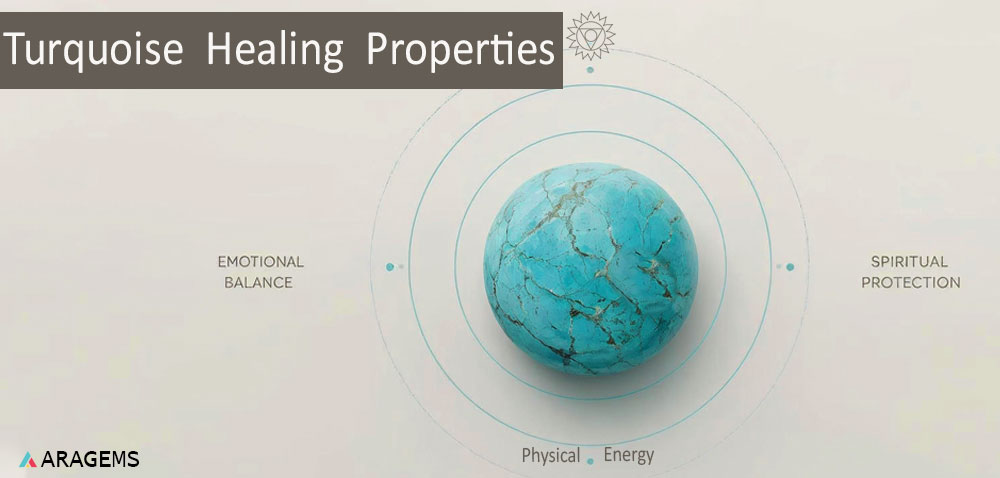
The core healing qualities associated with turquoise in traditional and energy-healing practice center around four themes:
1. Emotional Balance & Stress Relief
Turquoise is widely regarded as a stone of inner calm, traditionally used to ease anxiety, emotional overwhelm, and mental restlessness.
- Soothing emotional tension
- Supporting emotional clarity
- Encouraging compassion and self-forgiveness
- Strengthening resilience during difficult transitions
2. Truthful, Clear Communication
As a throat chakra stone, turquoise is traditionally believed to enhance honest expression and give courage to speak one's truth. See our full Turquoise Chakra Meaning guide for the chakra-by-chakra breakdown.
3. Spiritual Protection
Persian, Egyptian, and Native American cultures alike regarded turquoise as a guardian stone, worn to shield against negative energy.
4. Physical Vitality
In holistic traditions, turquoise is linked to circulation, breath, and overall life force — again, a belief rooted in tradition, not clinical science.
What Is Turquoise, Scientifically?
Turquoise is a hydrous phosphate mineral of copper and aluminum (CuAl₆(PO₄)₄(OH)₈·4H₂O), typically forming in arid regions where copper-rich groundwater reacts with aluminum-rich rock. Its blue color comes from copper; a shift toward green usually signals iron replacing aluminum in the structure. For the full mineralogical breakdown, see What Is Turquoise.
This composition has no clinically documented physiological effect on the body. The healing associations below are traditional and spiritual beliefs, not scientific findings.
How Turquoise Is Used in Energy Work
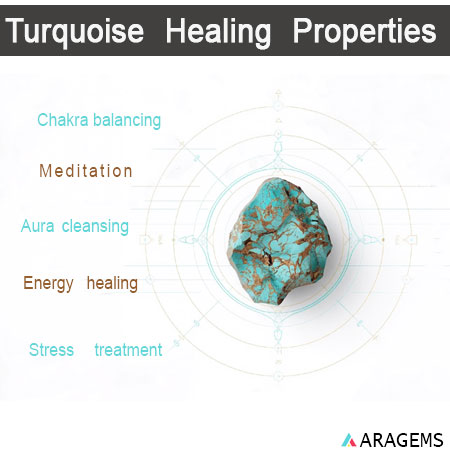
In crystal-healing practice, turquoise is traditionally used in:
- Chakra balancing sessions
- Aura cleansing
- Breathwork and meditation
- Energy healing (Reiki, pranic healing, sound therapy)
- Stress-relief practices
Practitioners describe its energy as cooling and stabilizing — a traditional framework, not a measurable physical property.
Why Authentic Turquoise Matters for Healing Use
Most turquoise sold today as a "healing crystal" is reconstituted material, dyed howlite, or stabilized stone — not natural turquoise. In traditional and energy-healing frameworks, a stone's effectiveness is believed to depend on it being genuine and naturally formed, not a treated substitute. Before using turquoise for healing work, it's worth learning how to spot genuine turquoise from fake.
Persian turquoise, especially from Neyshabur, has been the historical benchmark for genuine, untreated turquoise for over 2,000 years — the same stone used in the traditions this guide describes. If you're looking to buy, ARAGEMS offers natural Neyshabur turquoise cabochons sourced directly from the mine.
Turquoise Jewelry and Continuous Contact
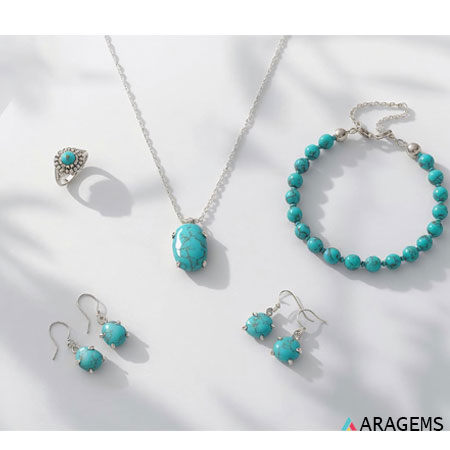
Wearing turquoise jewelry is traditionally believed to keep its energy in constant contact with the body:
- Turquoise rings → emotional grounding
- Turquoise necklaces → throat chakra activation
- Turquoise bracelets → continuous energy flow
- Turquoise earrings → alignment and mindfulness
Many cultures believe turquoise jewelry becomes "attuned" to its wearer over time.
Caring for Turquoise During Healing Use
Turquoise is a relatively soft, porous stone (5–6 on the Mohs scale), so proper care matters if you're wearing it daily for energy work:
- Avoid perfumes, lotions, and household chemicals
- Remove it before swimming, showering, or exercising
- Keep it away from direct, prolonged sunlight
- Store it separately from harder gemstones that could scratch it
For the complete maintenance routine, see How to Clean and Care for Turquoise Jewelry.
How to Use Turquoise for Healing
- Wear it daily — rings, necklaces, or bracelets for continuous contact.
- Meditate with it — placed on the throat or heart chakra.
- Keep it in your space — on a desk or in a meditation area.
- Combine it with other stones — such as Lapis Lazuli (truth, clarity), Malachite (emotional transformation), or Amethyst (spiritual calm).
Frequently Asked Questions
Is turquoise scientifically proven to have healing powers?
No. Turquoise’s healing properties come from centuries of cultural and spiritual tradition, not clinical or scientific evidence. It should not replace medical treatment.
What chakra is turquoise associated with?
Turquoise is primarily linked to the throat chakra (communication), with a secondary association to the heart chakra.
Does fake or dyed turquoise still “work” for healing purposes?
In traditional energy-work frameworks, no — the belief is tied to the stone being genuine, natural turquoise.
Can I wear turquoise every day?
Yes, but it’s a relatively soft, porous stone that needs care — avoid chemicals, lotions, and prolonged sun exposure.
What’s the difference between turquoise’s healing properties and its metaphysical meaning?
Healing properties refer to how the stone is traditionally used in energy work and wellness practice, while metaphysical meaning covers its broader symbolism.
Final Thoughts
Turquoise’s reputation as a healing stone spans millennia and cultures, from ancient Persia to modern energy practitioners. That reputation is built on tradition and belief rather than clinical science — worth engaging with honestly rather than as a marketing claim.
What tradition does confirm is that these beliefs were built around genuine, naturally formed turquoise — not the dyed or reconstituted material common in today’s market. If you want to work with the same stone these traditions describe, explore our turquoise wholesale selection, sourced directly from Iran’s historic mines.