
Blog
Kingman Turquoise: Mine History, Color, Value, and How It Compares to Persian Turquoise

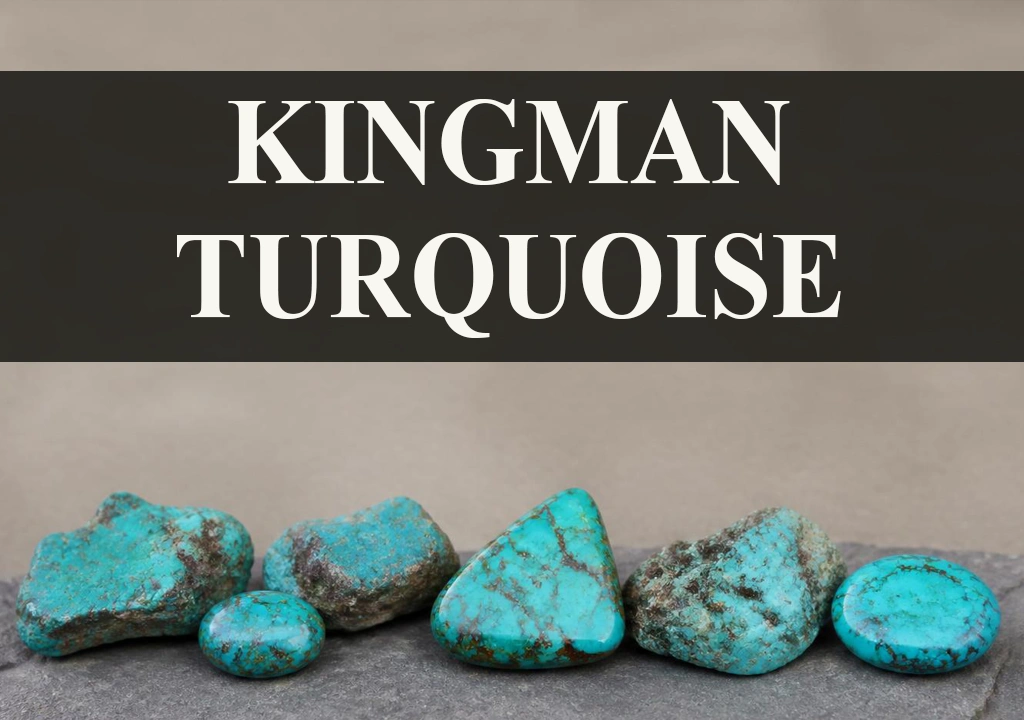
Kingman turquoise is the most familiar face of American turquoise — and that is exactly what makes it the hardest to buy safely. For roughly seventy years it has been mined and marketed at volume from a single Arizona district, its colour became the industry's American standard, and material from at least two other countries has been sold under its name. Understanding Kingman properly means understanding three things at once: where it actually comes from, why most of it is treated, and how to tell the genuine article from the many stones that borrow its reputation.
This guide draws on published gemmological reference works, mine and trade records, GIA and Mindat locality data, and current market pricing to explain what Kingman turquoise is, how it formed, how it is graded and priced, and how it differs from the Persian turquoise that has set the global benchmark for over a thousand years. For the wider family of deposits it belongs to, see our guide to the types of turquoise.
Quick Facts: Kingman Turquoise
| Property | Kingman Turquoise |
| Origin | Mineral Park Mining District, Cerbat Mountains, Mohave County, Arizona, USA |
| Distance from Kingman, AZ | About 14 miles (23 km) north-west, at roughly 3,300 ft elevation |
| Main deposit areas | Ithaca Peak and Aztec Peak (also called Turquoise Mountain) |
| Deposit type | By-product of open-pit porphyry copper mining, not a dedicated turquoise mine |
| Chemical formula | CuAl6(PO4)4(OH)8·4H2O — the same as all true turquoise |
| Mohs hardness | 5 to 6 |
| Typical colour | Sky blue to deep blue; green tones from the Turquoise Mountain side |
| Typical matrix | Most often white; also light brown, black web, and pyrite flecking |
| Usual treatment | Most commercial material is stabilised with resin |
| Current operator | Colbaugh Processing (Colbaugh family) |
Mineral data follows GIA and Mindat; locality, ownership and treatment history follow the published turquoise reference works cited at the end of this article.
What Is Kingman Turquoise?
Kingman turquoise is turquoise recovered from the Mineral Park Mining District in the Cerbat Mountains of Mohave County, Arizona, about fourteen miles north-west of the town of Kingman. Like all true turquoise it is a hydrated copper aluminium phosphate with a Mohs hardness of 5 to 6 — chemically identical to Persian turquoise and to every other genuine deposit worldwide. If you are new to the mineral itself, our guide to what turquoise is covers the chemistry and formation in detail. What distinguishes Kingman is not its chemistry but its geological setting, its scale, and its commercial history.
The single most important fact about Kingman turquoise is that it is a by-product. The deposit sits inside a large open-pit copper operation, and turquoise is recovered when a bearing zone happens to be exposed on a working bench. This is the same relationship that governs turquoise mining in Kerman, Iran, and it produces the same consequences: supply that follows the copper operation rather than gem demand, and material that varies widely in quality within a single deposit. ARAGEMS carries natural Kerman turquoise cabochons sourced directly from this same Iranian deposit.
A second fact shapes everything a buyer sees on the market. Joe Dan Lowry, whose reference work on turquoise is among the most cited in the field, records that Kingman's blue — together with similar hues from Sleeping Beauty — made this colour the most common look of any American turquoise. A look that common is a look that is easy to imitate, and Kingman's name gets borrowed accordingly.
Where Kingman Turquoise Comes From: The Mineral Park Mining District
The turquoise occurs in two main areas within the district: Ithaca Peak and Aztec Peak, the latter more commonly called Turquoise Mountain in the trade. Both have produced turquoise in prehistoric and modern times. Turquoise forms here as a secondary mineral, precipitating where copper-bearing solutions from the weathering of the porphyry copper system meet aluminium- and phosphate-rich host rock near the surface.
Much of the material occurs as seams, masses and veins running through the host rock rather than as discrete nuggets, though the nuggets Kingman does produce are among its most prized output. Matrix minerals include quartz, pyrite and calcite, and it is the pyrite in particular that gives the finest Kingman stones their characteristic metallic flecking.
The high-grade material from Ithaca Peak is historically the most sought-after Kingman turquoise, but that vein has been exhausted since 1972 and the peak itself has since been removed by copper mining. Current extraction takes place on the face of Turquoise Mountain. Several trade names circulate for material from this one district — Ithaca Peak, Turquoise Mountain, Old Man Mine, Kingman Duval, Courtland and The Wall among them — which is worth knowing, because a stone sold under any of these names is Kingman-district turquoise, not a separate mine.
A Contested History: Who Found Kingman Turquoise, and When
Working of these deposits long predates any modern claim. Archaeological evidence points to turquoise extraction in the surrounding area more than a thousand years ago, and stone hammers and worked specimens have been recovered from ancient trenches and tunnels in the hills — part of what has been described as the most extensive prehistoric workings in Arizona.
The modern discovery is where the sources stop agreeing, and it is worth being honest about that rather than picking a convenient date. Credit generally goes to James W. Haas, but the year is disputed across at least three accounts. Haas himself, writing in the Mining and Scientific Press in 1902, said he made the discovery about twenty-eight years earlier — which points to roughly 1874. D. B. Sterrett's 1906 U.S. Geological Survey report gives 1885. George Kunz first reported the discovery in 1885, crediting samples brought by Bernard Moses. Lowry simply places it in the late 1800s.
Any page that offers a single confident year for the discovery of Kingman turquoise is choosing one of three accounts without telling you. The honest summary is that the modern rediscovery is credited to Haas and dates to somewhere between about 1874 and 1885.
From Boom to Ghost Town: The Commercial Era
The settlement of Mineral Park was founded in 1871 near the camp of Chloride. In 1882, while surveying the route of the Atlantic & Pacific Railroad, Lewis Kingman gave his name to a settlement about fifteen miles to the south-east; by 1887 Kingman had taken the county seat. Mineral Park, which once had restaurants, hotels and its own newspaper, lost its post office in 1912 and is now a ghost town.
The turn-of-the-century commercial era is well documented. The Aztec Turquoise Company incorporated on 29 June 1900 and was working the deposits at Turquoise Mountain by mid-1901; the Southwest Turquoise Company incorporated in 1903. The Los Angeles Gem Company, the Arizona Turquoise Company and the Mineral Park Turquoise Company also worked the district in this period. Then came the bust: companies stopped work and the turquoise market in the area went dormant for years.
Leonard Hardy, the Colbaugh Family, and the Invention of Stabilised Turquoise
Kingman's modern reputation is, to a significant degree, a marketing story with a name attached. Leonard W. Hardy, who had been a shovel operator at the Castle Dome open-pit copper mine in 1949, went on to lease both the Kingman mine at Mineral Park and the Sleeping Beauty mine, and marketed the area heavily through the 1950s, 1960s and 1970s. The Duval Corporation's open-pit operations originally leased the turquoise rights to Hardy.
Hardy matters for a second reason that every buyer should know. During the 1950s and 1960s he developed the early treatment processes that became known as stabilised turquoise — and he developed them for the Kingman mine. The first recorded sighting of treated Kingman material dates to 1961, by the cutter Clive Edgar of Manassa, Colorado, at Charles Gregory's cutting shop in Albuquerque. In other words, stabilised turquoise as a commercial category was substantially born at this mine.
Under Hardy's operation in the 1970s, Kingman was producing close to half the world's turquoise supply; one estimate attributed to Hardy puts 1973 output at over 80,000 pounds. Chuck Colbaugh held the turquoise mining contract for Ithaca Peak and Turquoise Mountain from the early 1960s, and the concession has stayed in the family ever since — today it is run by Marty Colbaugh and his son Josh through Colbaugh Processing. Chuck Colbaugh represented Arizona in a Smithsonian Institution gemstone exhibition with a Kingman cabochon, and he and his wife Edith donated thirty Kingman turquoise carvings to the Mohave Museum of History and Art in the early 1970s, where they remain on display.
"Kingman Blue": Colour, Matrix, and What Collectors Look For
Kingman's high blue became a reference point in the American trade, to the extent that "Kingman Blue" functions as an informal colour standard. Natural material ranges from light to very dark blue, with green tones appearing particularly in stone from the Turquoise Mountain side of the district.
Water web, bird's eye, and pyrite
Beyond colour, three matrix characteristics drive value in Kingman material. The "water web" matrix — a fine, flowing web pattern — is the district's signature. A "bird's eye" pattern, in which small rounded matrix formations are scattered through the stone, is prized when combined with water web. Most desirable of all is deep blue material carrying molybdenum pyrite: brassy metallic flecking that forms naturally in the copper-sulphide environment of the deposit.
The white matrix that most guides get wrong
It is widely repeated that Kingman is a spiderweb turquoise with heavy black webbing. That is only partly right, and the error can cost a buyer real stones. Lowry records that Kingman and Sleeping Beauty material mostly has a natural white matrix. Black-web Kingman genuinely exists — Chambless publishes a photograph of Kingman black web (cobweb) turquoise from a private collection, and dark-blue black-webbed material from the 1970s is among the most expensive Kingman on the market — but it is not the typical presentation. Treating "Kingman equals black spiderweb" as a rule will make you reject genuine stones.
Nuggets
Rounded bright-blue nuggets with black matrix are Kingman's most famous product. Few turquoise mines have produced nuggets of comparable quality, which is why nugget material commands a premium over the seam and vein material that makes up most of the district's output.
Natural vs Stabilised Kingman Turquoise
This is the single most important thing to understand before buying Kingman turquoise, and it deserves a direct answer: the large majority of turquoise sold as Kingman is stabilised. Stabilisation infuses a clear resin or epoxy into the porous stone, hardening it so that chalky material can be cut and polished, and locking in colour that would otherwise shift with exposure to oils and heat.
Two things follow, and they pull in opposite directions. Stabilised Kingman is genuine turquoise — it is real stone from a real deposit, not an imitation, and the treatment is disclosed and accepted throughout the jewellery trade. It is also more durable than untreated porous material, which makes it well suited to rings and daily-wear pieces. At the same time, high-grade natural untreated Kingman accounts for a very small share of total output, is genuinely rare, and is priced accordingly.
Buyers should also be aware of two further categories. Colour-added material exists in the Kingman market — trade names such as "pink dahlia" describe dyed rather than naturally coloured stone. And the proprietary Zachery treatment has been used on some turquoise; one of the few published gemmological investigations of that process, conducted by GIA, detected elevated potassium levels in treated material. Neither is a scandal in itself, but both are reasons to ask a seller a direct question rather than assume.
The distinction between natural, stabilised and reconstituted material matters far beyond this one mine. Our guide to real vs fake turquoise sets out the tests gemmologists use across all sources.
How Much Is Kingman Turquoise Worth?
Kingman pricing spans a wide range because the material itself does. The figures below reflect rough and cabochon material offered by established dealers at the time of writing; treat them as an orientation rather than a fixed schedule, since turquoise pricing moves with grade, size and supply.
| Grade / type | Typical price | Notes |
| Stabilised, blue-green to green, heavy matrix | about $3 per gram | Entry level; large chunks, hobbyist material |
| Stabilised blue with light matrix | about $4 per gram | Soft robin's-egg blue, suitable for cabochons |
| Stabilised clear blue, no matrix | about $5 per gram | Hardened only, no colour added; small nuggets |
| 1970s Kingman Duval / Old Man Mine | about $6–7 per gram | Older stock, prepared for cabbing |
| Nuggets | about $10 per gram | Dark blue; scarce in this form |
| High-grade 1970s Turquoise Mountain | about $15 per gram | Spiderweb with black, gold or watermark matrix |
| 1970s dark blue with black webbing | about $20 per gram | The classic collector material; not currently produced |
| Cut cabochons, per carat | about $3–8 per carat | Natural and stabilised cabs at typical commercial grades |
Two patterns are worth noticing. First, age matters: material mined in the 1970s, before the highest-grade zones were worked out, consistently commands multiples of current production. Second, the premium attaches to matrix pattern and colour depth rather than to the Kingman name itself — which is precisely why buying on name alone is risky. For how these same factors work in Iranian material, see our guide to Persian turquoise price per carat.
The Kingman Name Problem: Turquoise That Isn't From Kingman
This is the part of the Kingman story that a seller has the least incentive to tell, so we will state it plainly. Lowry records that Mexican turquoise has been misrepresented and sold as Kingman turquoise since before the 1970s. He notes that Mexican mines can produce turquoise almost a perfect match to the more famous Kingman, Sleeping Beauty and Morenci material, and that China's Ma'anshan deposit produces blue turquoise similar to the American mines at Kingman and Morenci.
Because the imitation is another genuine turquoise of closely matching appearance rather than a manufactured fake, visual identification is unreliable. Lowry's own remedy is documentary rather than visual: a buyer who wants a specific mine's stone needs a written guarantee of the mine source. That advice aligns with the U.S. Indian Arts and Crafts Board's guidance for buyers of Native American jewellery, which recommends obtaining, in writing, the artist's name and Tribal affiliation, the mine of origin, whether the stone is natural, stabilised or treated, the place and date of purchase, the price, and the seller's business address.
The practical lesson generalises beyond Kingman. Where a mine name carries a price premium, that name will be borrowed — which is exactly why we publish the mine of origin and treatment status for the Iranian stones we sell rather than describing them generically as "Persian turquoise."
Kingman Turquoise vs Persian Turquoise
These two sources are frequently mentioned in the same breath and rarely compared properly. They are chemically the same mineral; almost everything else about them differs.
| Kingman (Arizona) | Persian / Neyshabur (Iran) | |
| Deposit type | By-product of open-pit copper mining | Dedicated turquoise mine |
| Documented working | Prehistoric; modern rediscovery c. 1874–1885 | Continuously worked for over 1,000 years |
| Colour benchmark | "Kingman Blue" — the American standard | "Persian blue" — the international standard cited by GIA |
| Typical matrix | Mostly white; water web, bird's eye, pyrite; black web less common | Ajami is matrix-free; Shajari shows brown to black spiderweb |
| Usual treatment | Most commercial material is stabilised | Top-grade Ajami material is typically untreated |
| Mohs hardness | 5 to 6 | 5 to 6 |
| Main risk to buyers | Mexican and Chinese material sold under the Kingman name | Lower-grade or non-Iranian material sold as "Persian" |
The honest conclusion is not that one stone is universally better. Kingman produced, and occasionally still produces, natural high-blue material that stands with the finest turquoise anywhere, and stabilised Kingman is a sound, durable, fairly priced choice for everyday jewellery. What the comparison does show is a structural difference in what you are most likely to be offered: a buyer shopping Kingman is, on the balance of production, being offered treated stone, while a buyer shopping high-grade Neyshabur material is more often being offered untreated stone. That difference in the default — not a difference in the mineral — is the substantive distinction between the two markets. For the full picture on the Iranian side, see our guide to what Persian turquoise is.
Is the Kingman Turquoise Mine Still Open?
Kingman is generally described as the last major commercially producing turquoise mine in the United States, and the claim rights have been held by the Colbaugh family for several generations. Turquoise recovery resumed in September 2004 after a long dormant period, with the copper operation's owners contracting to send turquoise-bearing material to Colbaugh Processing. The surrounding Mineral Park copper mine has itself been through a restart and modernisation programme under new ownership.
One caveat is worth carrying. Holding claim rights is not the same as active production, and which turquoise mines are producing changes from year to year depending on whether anyone invests in reopening ground. Any statement about the current status of a turquoise mine — including this one — should be treated as dated rather than permanent.
Frequently Asked Questions
Is Kingman turquoise real turquoise?
Yes. Kingman is genuine turquoise, chemically identical to turquoise from any other deposit, with a Mohs hardness of 5 to 6. The question worth asking is not whether it is real but whether a particular stone is natural or stabilised, and whether it actually came from the Kingman district.
Is Kingman turquoise natural or stabilised?
Most commercial Kingman turquoise is stabilised — resin-infused to harden the stone and lock in colour. This is disclosed and accepted in the trade and does not make the stone fake. High-grade natural untreated Kingman exists but represents a small share of output and is priced well above stabilised material.
How much is Kingman turquoise worth?
Rough ranges from roughly $3 per gram for stabilised green material with heavy matrix up to about $20 per gram for 1970s dark blue with black webbing. Cut cabochons commonly fall in the $3 to $8 per carat range at typical commercial grades. Colour depth, matrix pattern, treatment status and age of the material drive price far more than the Kingman name alone.
What does Kingman turquoise matrix look like?
Most often white, which surprises buyers who expect black spiderweb. The district's signature patterns are the flowing "water web" matrix and the "bird's eye" pattern, frequently with brassy pyrite flecking. Black-webbed Kingman does exist and is highly valued, but it is not the typical appearance.
Is the Kingman turquoise mine still open?
Kingman is usually described as the last major commercially producing turquoise mine in the United States, operated by Colbaugh Processing, with turquoise recovery having resumed in 2004. Because mine activity changes year to year, treat any current-status claim as dated.
Can you tour the Kingman turquoise mine?
The turquoise workings sit inside an active industrial copper mine, which limits public access. Visitors interested in the district's history can see Kingman turquoise carvings donated by the Colbaugh family on display at the Mohave Museum of History and Art in Kingman.
Is Kingman turquoise better than Persian turquoise?
Neither is universally better; they are the same mineral from different geological settings. The practical difference is what you are most likely to be offered. Most Kingman on the market is stabilised, while top-grade Neyshabur Persian turquoise is typically sold untreated, and Persian blue remains the international colour benchmark. Choose based on whether treatment status, colour, matrix pattern or provenance matters most to you.
Conclusion
Kingman turquoise earns its place in the history of American gemstones: a district worked for over a thousand years, the source of the colour that defined what most people picture when they picture American turquoise, and at its 1970s peak the origin of nearly half the world's supply. It is also the mine where stabilised turquoise was effectively invented, and the name most likely to appear on a tag that is not accurate.
Both of those facts point to the same conclusion for a buyer. Judge the stone, not the name: ask whether it is natural or stabilised, ask for the mine of origin in writing, and let colour and matrix quality set the price rather than reputation. That is the standard we hold ourselves to for the natural Persian turquoise stones we sell, and it is the standard worth applying to any mine-named stone — Kingman included.
References
- Lowry, Joe Dan, and Joe P. Lowry. Turquoise: The World Story of a Fascinating Gemstone. Gibbs Smith, 2010.
- Chambless, Philip, and Mike Ryan II. Turquoise in America, Part One: The Great American Turquoise Rush 1890–1910. Dallas Press LLC, 2011.
- Schiffer, Nancy. Turquoise Jewelry. Schiffer Publishing.
- Gemological Institute of America — gia.edu/turquoise (chemistry, hardness, cause of colour, and gemmological study of the Zachery process).
- Mindat.org — Mineral Park Mine, Ithaca Peak, Mineral Park Mining District, Cerbat Mountains, Mohave County, Arizona, USA.
- U.S. Department of the Interior, Indian Arts and Crafts Board — consumer guidance on buying turquoise and Native American jewellery.