
Blog
Where to Buy Authentic Persian Turquoise Online: A Buyer’s Guide

Persian turquoise has one of the strongest reputations of any turquoise on the market, and that reputation has a downside: it gets borrowed. A large share of the "Persian turquoise" listed on marketplaces and social media shops is either dyed howlite, stabilized Chinese material relabeled for a better price tag, or genuine turquoise from a different country sold under Iran's name. Buying online adds a layer of difficulty, since you cannot hold the stone, check its weight, or ask a dealer to explain its history in person.
This guide is written for two kinds of buyers: collectors and jewelry buyers purchasing a single stone or a finished piece, and jewelers or distributors sourcing larger quantities. Knowing where to buy Persian turquoise online safely comes down to one shared skill: recognizing which sellers actually disclose where their turquoise comes from, and which ones are simply using "Persian" as a marketing word.
Why Buying Persian Turquoise Online Takes Extra Care
Turquoise is one of the most imitated and treated gemstones in the trade. Dyed howlite and magnesite, reconstituted turquoise powder, and plastic composites are all sold under the turquoise name, and photographs alone rarely settle the question. Before you evaluate any seller, it helps to understand the full picture of how genuine stones differ from imitations — our real vs fake turquoise guide walks through the physical and visual tests used to tell them apart. The guidance below builds on that foundation and focuses specifically on the buying decision: how to judge a seller before you place an order.
What Defines Authentic Persian Turquoise
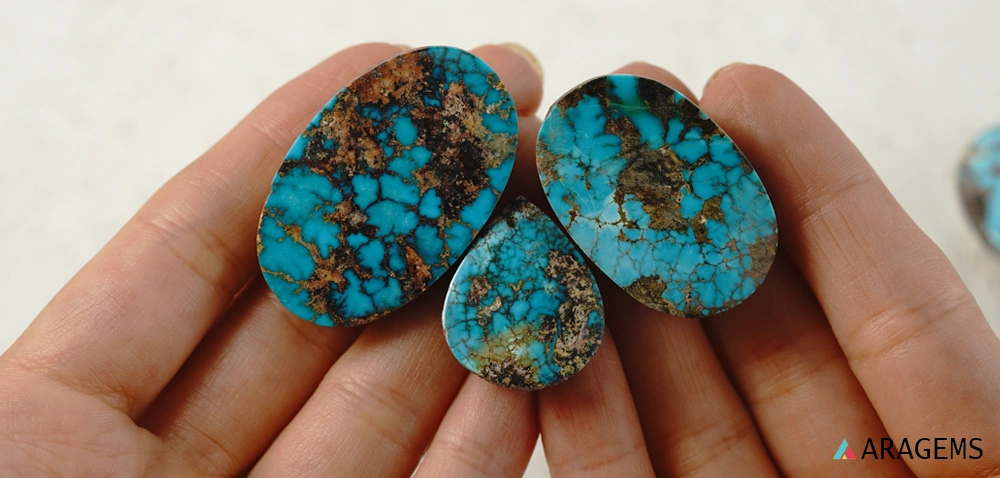
Authentic Persian turquoise is turquoise physically mined in Iran, most commonly from the historic Neyshabur deposits in Khorasan Province or the Kerman region, and sold without deceptive treatment. For a full breakdown of the geology, color range, and Ajami versus Shajar classifications, see our guide to What Is Persian Turquoise. The short version that matters for a buying decision: origin and treatment are two separate questions, and a trustworthy seller answers both without being asked twice.
What to Look for in a Trustworthy Persian Turquoise Seller
A seller's product page or listing tells you almost as much as the stone itself. The following five signals separate dealers who know and disclose what they are selling from those who do not.
Clear Mine and Origin Disclosure
A reputable seller names the specific mine or region — Neyshabur, Kerman, or another documented Iranian source — rather than using “Persian” as a generic quality label. If a listing cannot say where the stone was mined, treat the origin claim as unverified.
Honest Treatment Disclosure
Natural, untreated turquoise should be labeled as such. Stabilized, dyed, or reconstituted material is not automatically fraudulent, but it must be disclosed — selling treated turquoise as “100% natural” is the single most common form of misrepresentation in this market.
Transparent, Market-Consistent Pricing
Genuine, high-grade Persian turquoise is priced within a known range once you account for color, matrix, and carat weight. Our Persian Turquoise Price per Carat guide breaks down what drives that price. A listing priced far below the low end of that range for stated top-grade material is a warning sign, not a bargain.
Real Photography of the Actual Stone
Look for multiple angles of the specific stone you would receive, ideally including a scale reference such as a coin, ruler, or hand. Listings that reuse the same polished studio photo across dozens of “different” stones are usually selling a batch, not the individual piece pictured.
Clear Return and Authenticity Policy
A seller confident in their stones will accept returns if a piece is found to be misrepresented, and will put that policy in writing before you buy — not only after a dispute.
Red Flags That Signal Fake or Misrepresented Turquoise
- A price far below the typical per-carat range for the grade and color claimed.
- Generic stock photography instead of images of the actual stone for sale.
- No mention of a specific mine, region, or treatment status anywhere in the listing.
- Vague, repeated marketing language (“100% genuine,” “rare find”) with no supporting detail.
- A seller with no verifiable history, reviews, or business information.
- Pressure to buy immediately, with claims of extremely limited stock on every listing.
Retail vs. Wholesale: Choosing the Right Purchase Path
Individual collectors and jewelry buyers are usually best served by retail listings of single cabochons, beads, or finished pieces, where each stone can be reviewed on its own. Jewelers, designers, and distributors buying in volume have different priorities — consistent grading, bulk pricing, and a supplier who can fulfill repeat orders. If you fall into the second category, our Turquoise Wholesale page outlines bulk options and custom quotes for Persian turquoise sourced directly from Iranian mines.
Buying Persian Turquoise Internationally: What to Know Before You Order
Persian turquoise moved freely into markets like the United States for most of the 20th century, and much of the antique and vintage Persian turquoise jewelry seen in Western collections today dates from that period. Trade sanctions imposed on Iran since the late 1970s have since complicated the direct import of Iranian-origin goods, including gemstones, into some countries.
This does not mean buying Persian turquoise internationally is impossible — reputable sellers ship globally through legitimate channels every day — but it does mean the rules can depend on where you live and can change. Before placing an international order, especially from the United States, it is worth confirming the current import requirements for gemstones of Iranian origin with your country's customs authority. This guide is informational, not legal advice, and a seller's customer service team should be able to tell you how they handle shipping and documentation for your region.
A Step-by-Step Checklist: Where to Buy Persian Turquoise Online Safely
- Identify the specific mine or region claimed (Neyshabur, Kerman, or otherwise) and confirm it is stated on the product page, not just in marketing copy.
- Ask directly whether the stone is natural or treated, and request that the answer be put in writing.
- Compare the asking price per carat against a known price guide for the stated grade and color.
- Request additional photos of the actual stone, including a scale reference, if the listing does not already include them.
- Read the seller’s return and dispute policy before paying, not after.
- Start with a smaller purchase to evaluate a new seller before committing to a bulk or high-value order.
- Keep the listing, invoice, and any written disclosures — this documentation matters if you ever need to resell, insure, or verify the stone later.
Where ARAGEMS Sources Its Persian Turquoise
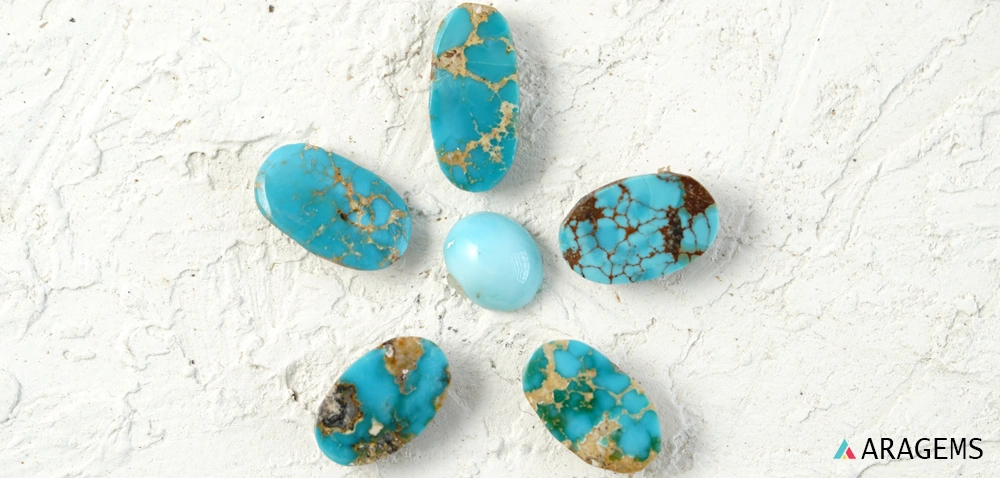
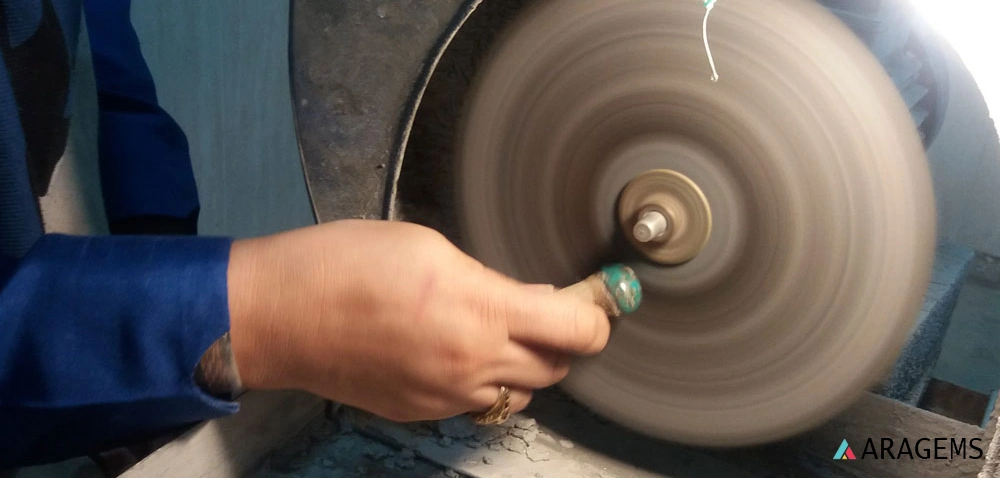
ARAGEMS sources Neyshabur turquoise and Kerman turquoise directly from their respective mining regions in Iran and finishes each stone in its own lapidary workshop. Origin and treatment status are disclosed on every listing, and both Ajami (matrix-free) and Shajar (veined) material are available depending on the piece. Collectors and jewelry buyers looking to buy Persian turquoise can browse individually photographed natural stones, while jewelers and distributors can request bulk pricing separately.
Frequently Asked Questions
Where can I buy authentic Persian turquoise online?
The safest approach is to work directly with a seller who discloses the mine of origin and the treatment status of each stone, rather than relying on generic marketplace listings. ARAGEMS sources its turquoise directly from the Neyshabur and Kerman mining regions in Iran, with origin and treatment disclosed on every listing — see the sourcing section above for details.
Is it safe to buy Persian turquoise online?
It can be, provided you buy from a seller who discloses the mine of origin, the treatment status of the stone, and offers real photography and a clear return policy. The risk in online buying comes from sellers who omit these details, not from online shopping itself.
How much should authentic Persian turquoise cost?
Price depends heavily on color, matrix pattern, and treatment status, and can range from modest per-carat prices for common-grade material to significantly higher prices for matrix-free, natural Ajami stones. A price far below the typical range for the grade claimed is a strong warning sign.
Can I buy Persian turquoise wholesale?
Yes. Jewelers, designers, and distributors can source Persian turquoise in bulk from suppliers who offer wholesale pricing and custom quotes, typically at better per-unit pricing than single-stone retail purchases.
Is it legal to buy turquoise from Iran?
Legitimate international trade in Persian turquoise does happen, but import rules for Iranian-origin goods vary by country and can change, particularly for buyers in the United States. Check your country’s current customs regulations before ordering, and ask the seller how they handle international shipping and documentation.
How can I verify a Persian turquoise seller is legitimate?
Look for a named mine or region, honest treatment disclosure, real photos of the stone being sold, a written return policy, and a verifiable business history. Sellers who provide all five without being pressed are far more likely to be selling what they claim.
Conclusion
Buying Persian turquoise online rewards patience more than luck. A seller who names the mine, discloses treatment, prices the stone in line with its grade, and stands behind it with a real return policy is worth paying attention to — and a seller who avoids all four questions is worth walking away from, regardless of how the photos look.