

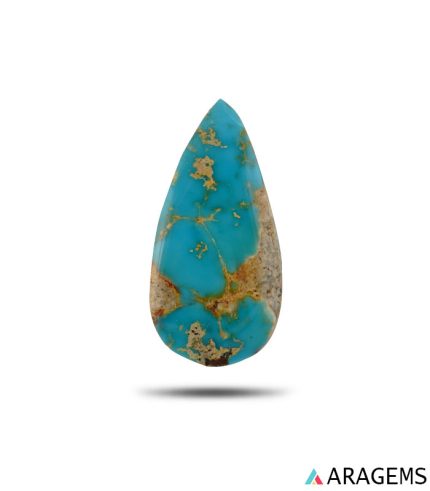
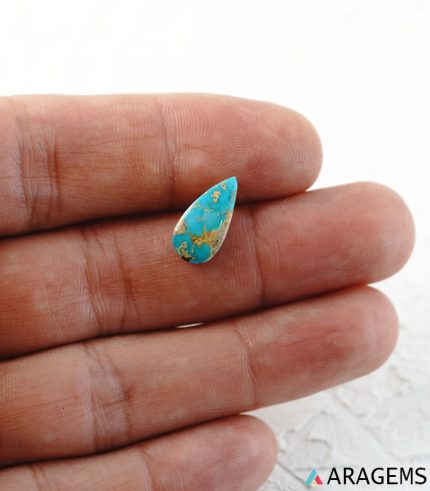
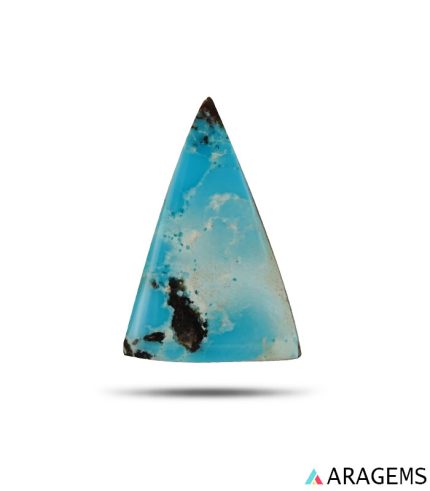
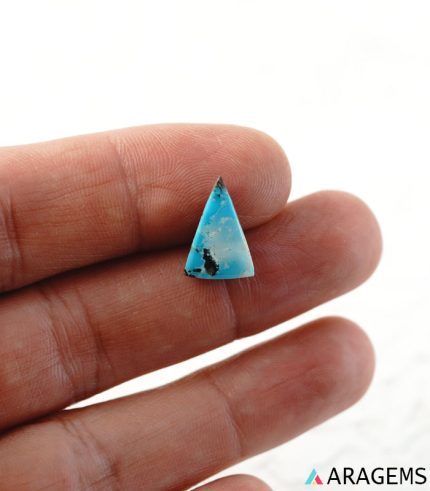
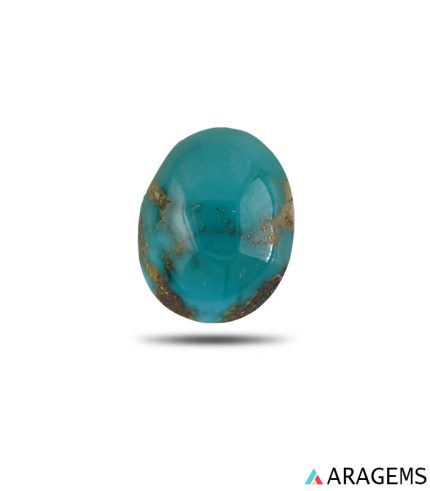
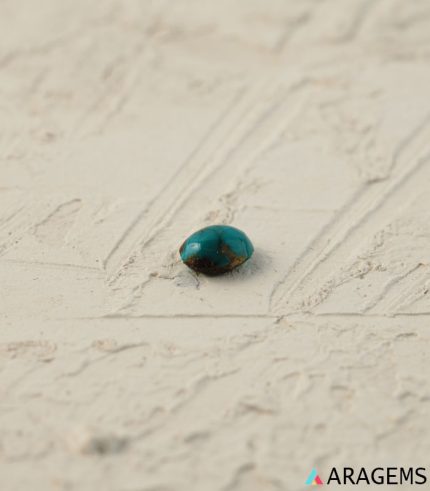
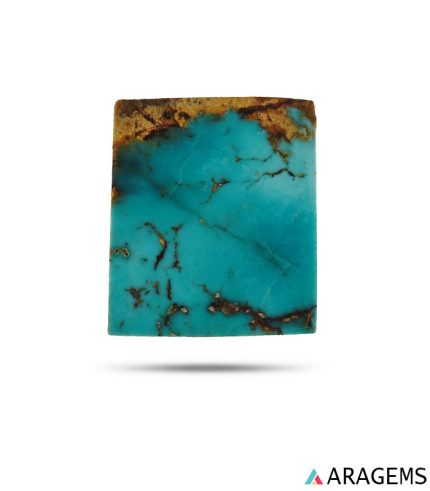
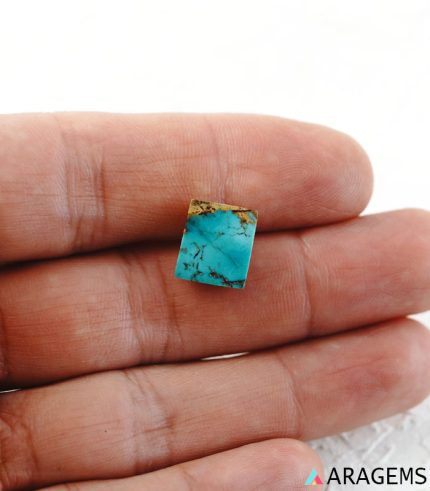
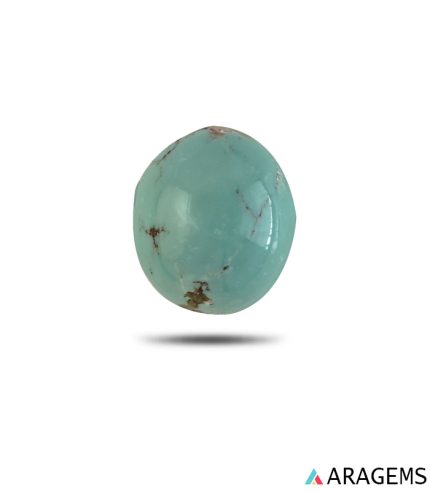
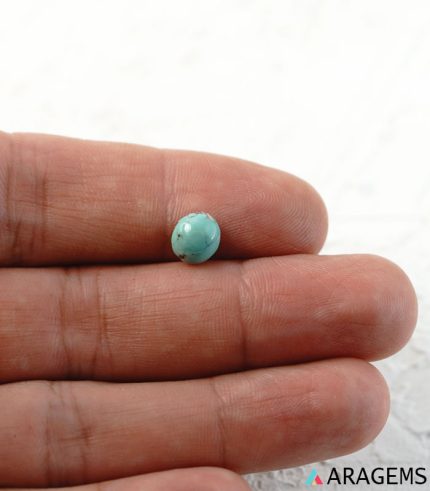
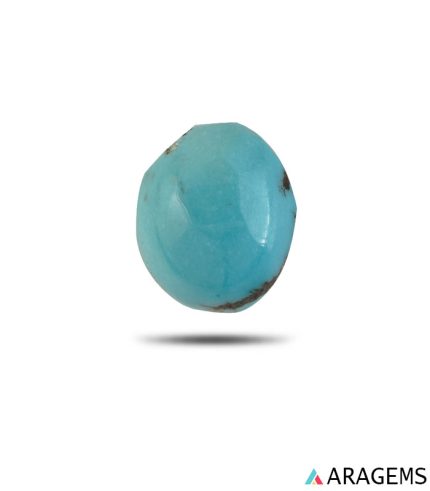
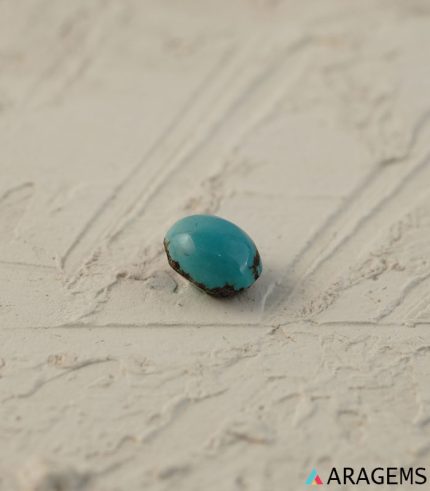
Neyshabur turquoise — also called Nishapur turquoise — is the stone that gave “Persian turquoise” its name. It comes from Iran’s largest and oldest turquoise mine, in Razavi Khorasan Province. Every piece in this collection is natural and untreated: never stabilized, dyed, or waxed. We cut and polish each cabochon in our own lapidary workshop, in both Ajami (matrix-free, solid blue) and Shajari (natural spiderweb matrix) varieties. Each stone is loose, one of a kind, and listed with its exact weight, dimensions, and mine of origin.
Why Neyshabur Is the Reference for "Persian Turquoise"
Neyshabur turquoise — also called Nishapur turquoise — comes from Raish Mountain, about 53 km from the city of Neyshabur in Iran's Razavi Khorasan province. For more than a thousand years it has been the stone traded worldwide simply as "Persian turquoise," and gemologists still use it as the reference standard for turquoise color. With more than 200 workers and roughly 4 tons of rough material a month, it remains Iran's largest turquoise producer — unlike the smaller Kerman deposits, which yield turquoise only as a byproduct of copper mining.
Ajami vs. Shajari: The Two Grades
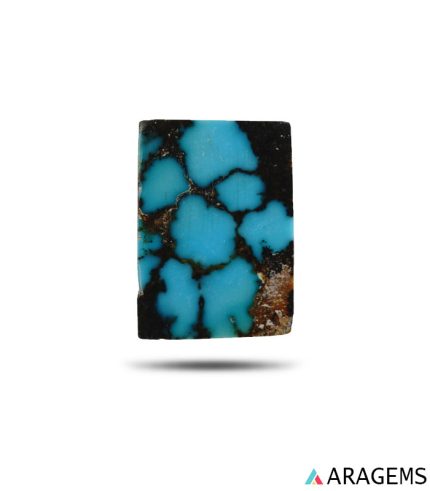
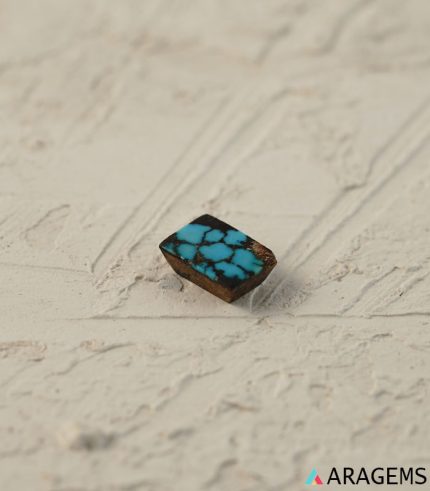
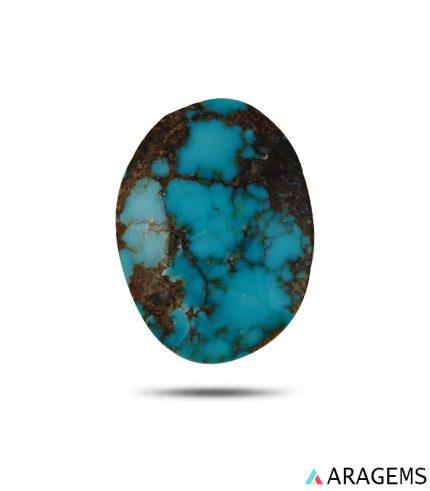
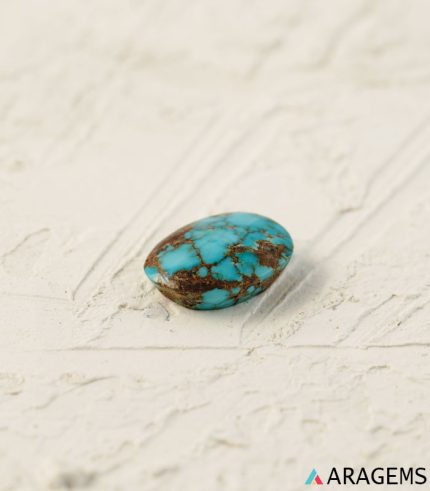
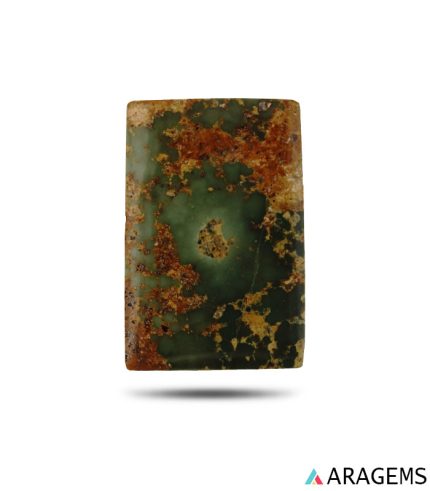
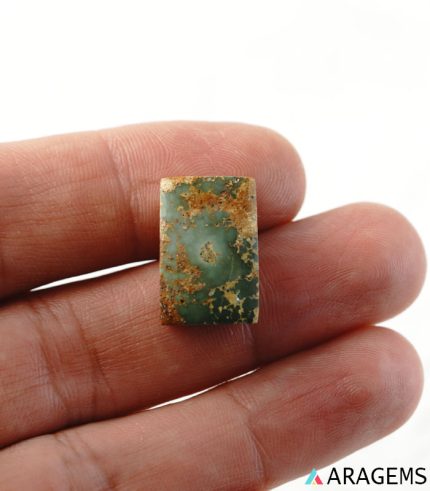
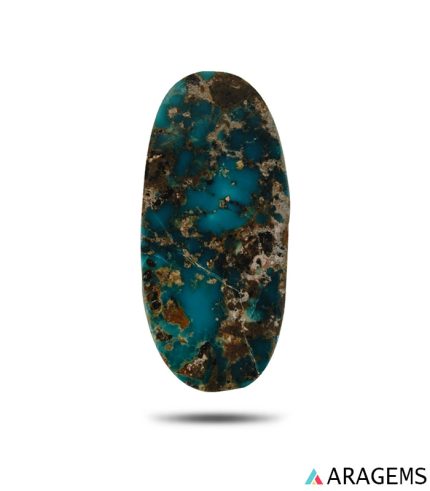
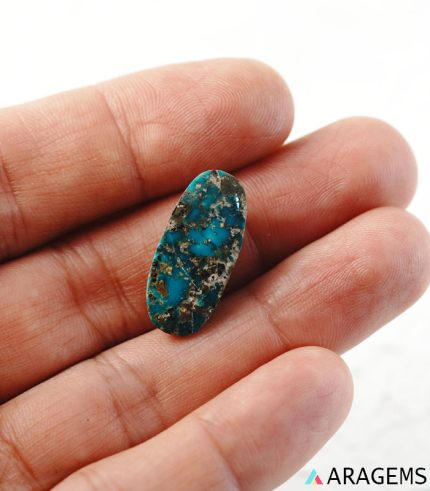
Neyshabur rough is sorted into two commercial grades. Ajami is dense, matrix-free material in an even sky-blue — the rarest and most valuable grade. Shajari keeps its natural host-rock veining, prized for a well-defined spiderweb pattern. Neither grade is treated; the difference is simply how much matrix the stone carries.
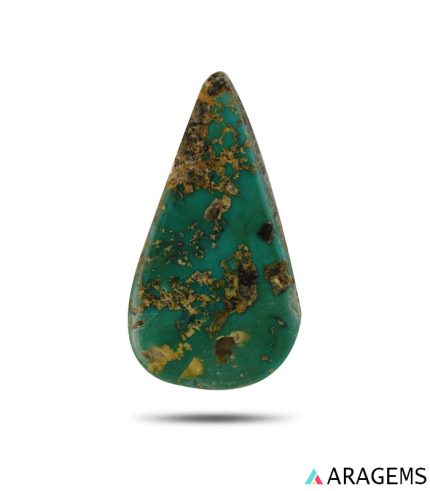
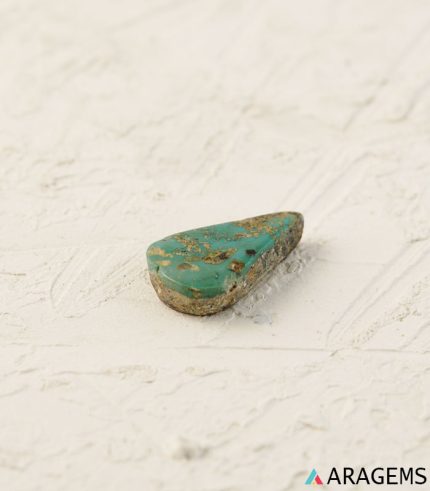
Turquoise Color: From Sky-Blue to Green
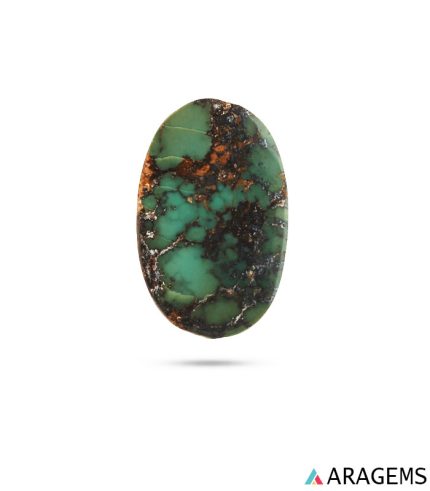
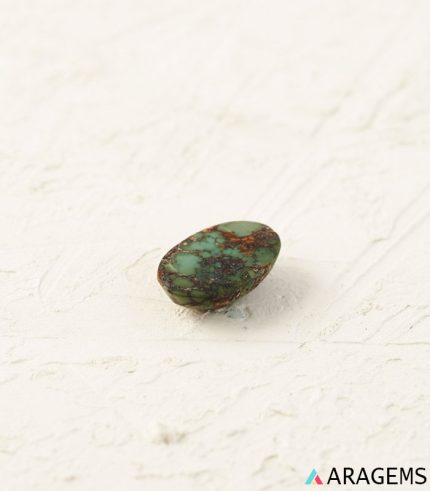
Turquoise’s color comes directly from its chemistry. In the mineral’s structure, aluminum and iron occupy the same site and compete with each other: the more aluminum relative to iron, the more a stone leans toward pure sky-blue; the more iron relative to aluminum, the more it shifts toward green. This is why turquoise from the same general region, or even the same deposit, can range from pure blue to blue-green to green. Neyshabur material is generally prized for its saturated blue, high-aluminum stones, though greener, more iron-rich pieces occur and are not a sign of lower quality — only a different mineral balance. This is separate from the gradual color drift some untreated stones show with years of skin contact and oils, which is covered in our turquoise care guide.
Is the Neyshabur Mine Closing?
A persistent rumor claims the Neyshabur mine has shut down or run dry. We can address this directly: the mine is active today, with turquoise extracted daily on a continuous basis. This matches the most detailed independent study of the mine, a 2020 field visit by the Gemological Institute of America published in Gems & Gemology, which also found ongoing operation. Supply fluctuates with the region’s broader copper-mining cycles, not exhaustion of the deposit.
Natural and Untreated
Every stone in this collection is natural Neyshabur turquoise — never stabilized, dyed, or waxed. Each is cut and polished in our own lapidary workshop and listed with its exact weight, dimensions, and grade (Ajami or Shajari), so you know precisely what you are buying.
Frequently Asked Questions
Is Neyshabur turquoise rare?
Neyshabur is Iran's largest producer by volume, so the material itself is not rare — but top Ajami-grade stones, with even color and no matrix, are scarce and priced accordingly.
What is the difference between Ajami and Shajari turquoise?
Ajami is solid, even-colored material with little to no matrix. Shajari shows a natural spiderweb of host-rock veining. Both are genuine, untreated Neyshabur turquoise; the choice is a matter of pattern preference.
Does all Neyshabur turquoise require treatment?
No. Dense Ajami and Shajari material is stable enough to cut and polish without stabilization. Only the softer, more porous rough — not sold in this collection — typically needs resin treatment.
How much does Neyshabur turquoise cost?
Price follows color saturation, matrix pattern, and size. See our Persian turquoise price per carat breakdown for the full grading criteria.
Where can I read more about the Neyshabur mine?
Our complete guide to Neyshabur turquoise covers its geology, mining tunnels, and how to identify authentic material in full detail.