
Blog
How to Clean and Care for Turquoise Jewelry: The Complete Maintenance Guide

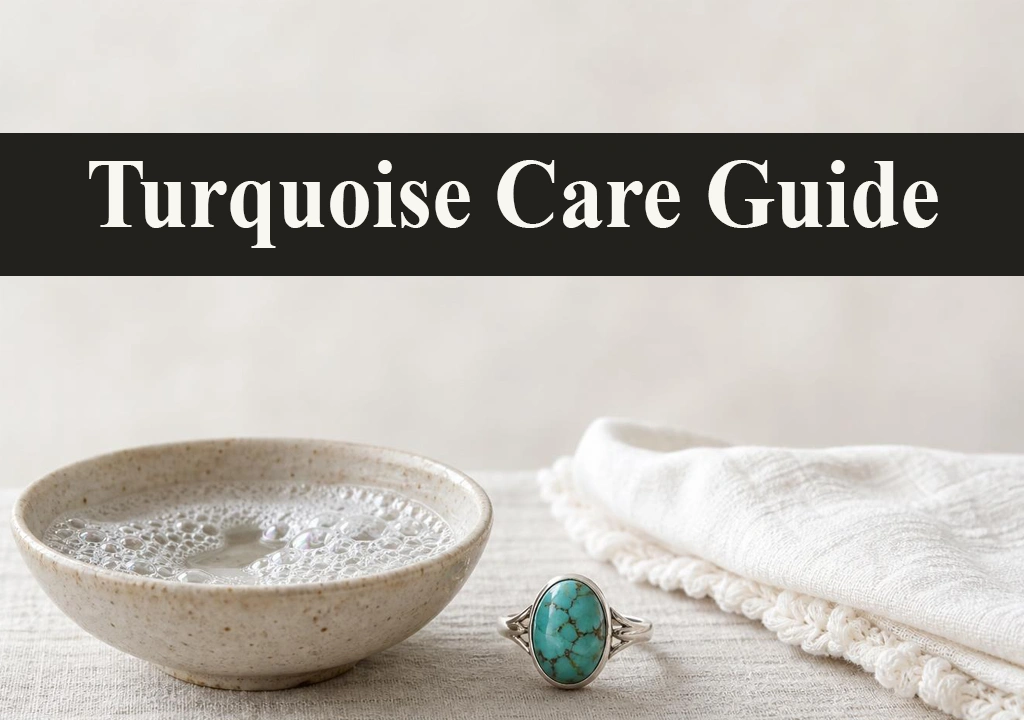
Turquoise is one of the most beloved gemstones in jewelry, but it’s also one of the most delicate. Unlike diamonds or sapphires, turquoise is a relatively soft, porous stone that can be permanently discolored by something as ordinary as hand lotion or a swim in chlorinated water. This is especially true for genuine, untreated Persian turquoise, which — unlike much of the resin-stabilized commercial turquoise sold worldwide — has not been reinforced against chemical exposure and reacts more visibly to careless handling. This complete turquoise care guide walks through exactly how to clean turquoise jewelry safely, what to avoid, and how to store it so its color stays vivid for years to come.
Why Turquoise Needs Special Care
Turquoise ranks 5 to 6 on the Mohs hardness scale, with toughness generally rated fair to good, according to the Gemological Institute of America (GIA). That places it well below everyday jewelry stones like quartz or sapphire, which is why turquoise scratches and chips more easily than most other gems used in rings and bracelets.
Hardness is only part of the story. Turquoise is a hydrous phosphate mineral of copper and aluminum with a naturally porous structure — one of the most porous gem materials used in jewelry. That porosity means it can absorb skin oils, lotion, perfume, and cleaning chemicals, which is why care advice for harder, non-porous stones like sapphire or amethyst simply doesn’t apply to turquoise. For more on its composition and formation, see our complete guide to what is turquoise.
| Gemstone | Mohs Hardness | Porosity Level |
|---|---|---|
| Turquoise | 5–6 | High (porous) |
| Opal | 5.5–6.5 | Moderate |
| Quartz / Amethyst | 7 | Very low |
| Sapphire | 9 | Very low |
| Diamond | 10 | None |
Source: GIA (Turquoise Care and Cleaning Guide).
Natural vs. Stabilized Turquoise: Why the Care Rules Change
Much of the turquoise sold worldwide, particularly in mass-market American jewelry, is stabilized — impregnated with wax or resin that fills natural pores and fractures, making the stone more durable and more resistant to everyday chemicals. Stabilization improves practicality, but it also lowers rarity and value, since it alters the stone from its natural state.
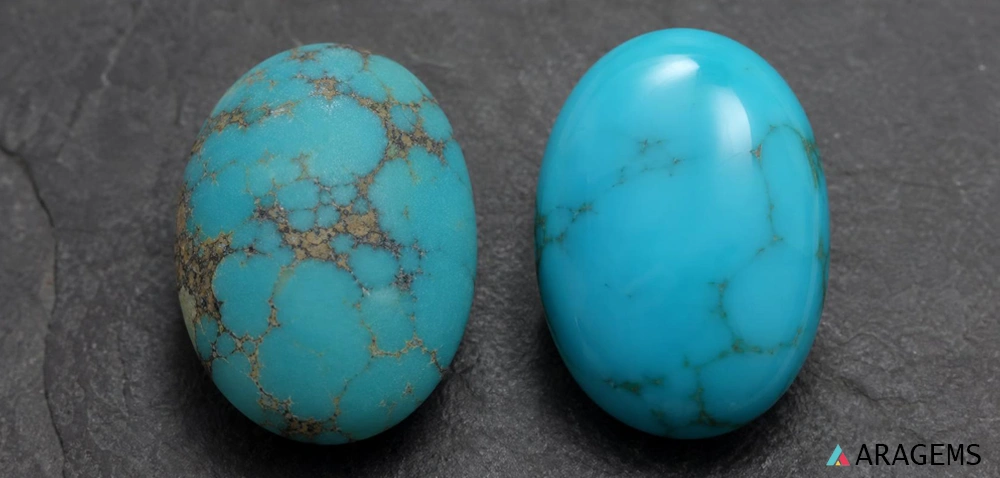
Genuine Persian turquoise, especially the high-grade Ajami material ARAGEMS sources from Iran, is prized specifically because it is typically left untreated. Natural, unstabilized turquoise is more porous and reacts more visibly to oils, chemicals, and moisture than treated stones — which makes proper care not optional, but essential to preserving both its color and its value. Learn more about how to distinguish natural, treated, and imitation material in our guide to real vs fake turquoise.
- Natural / untreated turquoise: more porous, more color-sensitive, requires the careful handling described in this guide — comparable to how you’d treat an opal or emerald.
- Stabilized / resin-treated turquoise: more forgiving with casual wear, but still vulnerable to heat, solvents, and ultrasonic or steam cleaning, which can damage the resin itself.
How to Clean Turquoise Jewelry Safely (Step-by-Step)
What You’ll Need
- Two soft, clean cloths (microfiber is ideal)
- A small bowl of lukewarm water
- A drop of mild, pH-neutral dish soap (avoid “tough on grease” formulas)
- A soft-bristled brush (optional, for settings with hard-to-reach crevices)
Step-by-Step Cleaning Process
- Mix a small amount of mild soap into the lukewarm water and stir until gently sudsy.
- Lightly dampen one cloth in the solution — do not soak the jewelry itself in the bowl.
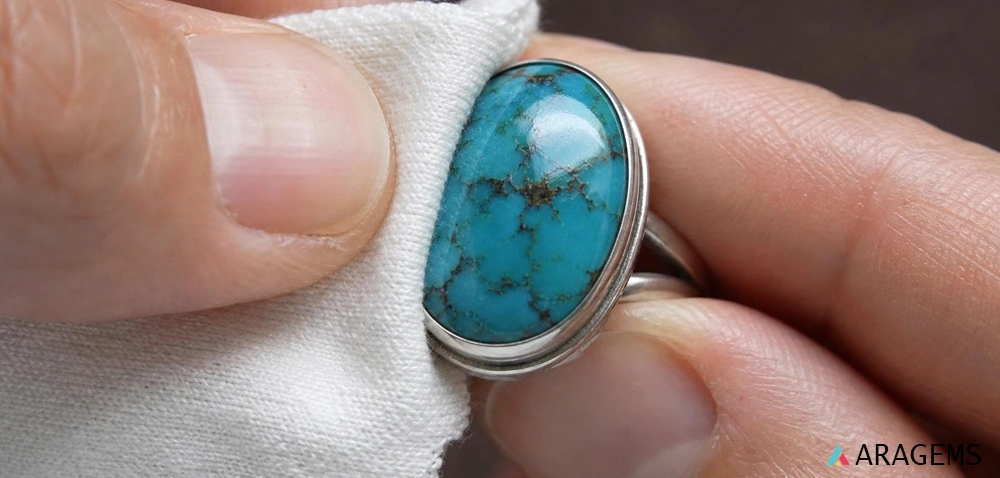
- Gently wipe the surface of the stone and the metal setting, using the soft brush only for detailed crevices.
- Wipe again with the second cloth, lightly dampened with plain water, to remove any soap residue.
- Dry immediately with a soft, dry cloth, then let the piece air-dry fully before storing or wearing it again.
Cleaning Methods to Avoid
According to GIA, turquoise should never be cleaned with steam or ultrasonic cleaners — both can damage the stone and any wax or resin treatment. The same caution applies to:
- Ultrasonic and steam jewelry cleaners
- Commercial jewelry-dip solutions and ammonia-based cleaners
- Alcohol, acetone, or other solvents
- Soaking or submerging the stone for extended periods
- Hot water, which can accelerate discoloration in some material
Cleaning Silver and Turquoise Jewelry Together
Most turquoise jewelry is set in sterling silver, so cleaning the two together — without damaging either — is one of the most common real-world questions turquoise owners have. The good news: the same gentle method above works for both materials at once.
- Use the same mild soap and lukewarm water solution described above; it’s safe for both sterling silver and turquoise.
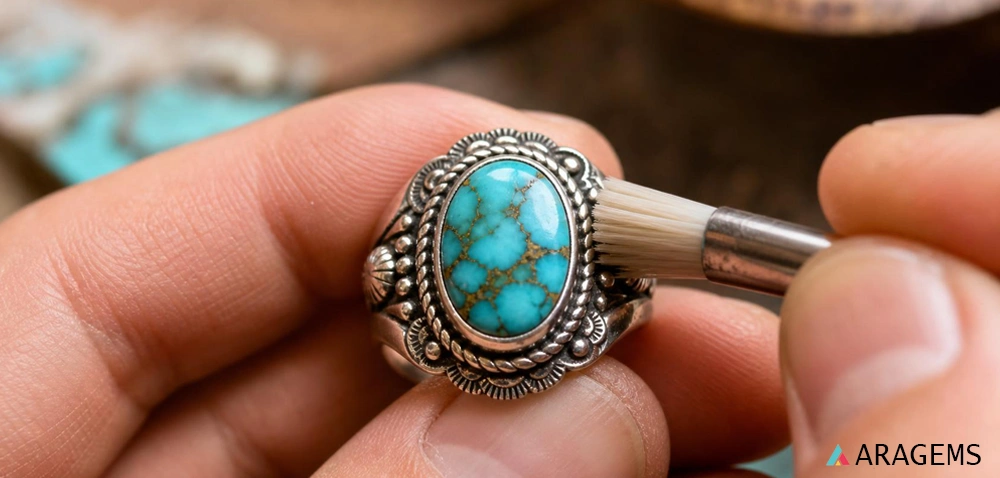
- For tarnished silver detail around the stone, a soft-bristled brush can reach into engraved patterns without scratching the turquoise’s surface.
- Avoid silver dips, tarnish-removal chemicals, and polishing cloths treated with abrasive or ammonia-based compounds — these are formulated for bare metal and can discolor or etch the turquoise.
- Dry the piece thoroughly afterward; trapped moisture between silver settings and the stone can accelerate tarnish and, over time, affect the turquoise itself.
If tarnish keeps returning quickly, storing the piece in an anti-tarnish pouch alongside a silica gel packet will slow the process without exposing the turquoise to chemical dips.
Everyday Habits That Protect Your Turquoise
Most turquoise damage happens gradually, through daily contact rather than a single accident. A few simple habits go a long way:
- Put turquoise jewelry on last, after applying makeup, perfume, lotion, and hairspray.
- Remove it before swimming, showering, exercising, cleaning, or gardening.
- Wipe the stone with a soft, dry cloth after each wear to remove skin oils and sweat.
- Avoid prolonged direct sunlight or heat — GIA notes that high heat can cause discoloration and surface damage in turquoise.
How to Store Turquoise Jewelry Correctly
Proper storage matters as much as cleaning, particularly for natural, untreated stones:
- Keep turquoise in a cool, dry, dark place, away from direct sunlight and heat sources such as radiators or sunny windowsills.
- Store each piece separately in a soft pouch or a fabric-lined jewelry box compartment — turquoise’s relative softness (Mohs 5–6) means it can be scratched by harder gems or metal jewelry stored alongside it.
- Add a small silica gel packet to your storage box to control humidity, since damp conditions can affect porous turquoise over time.
- Avoid long-term storage in tightly sealed plastic bags in humid climates; a breathable pouch in a dry environment is preferable.
Why Does Turquoise Change Color Over Time?
Gradual color change — often called “turquoise sickness” in trade circles — is one of the most common questions turquoise owners have. In most cases, it results from repeated absorption of skin oils, cosmetics, or household chemicals into the stone’s porous surface, combined with prolonged heat or sunlight exposure. This is more common in natural, untreated turquoise than in resin-stabilized material, which resists absorption. We cover the full science behind this phenomenon — including how to slow it down — in an upcoming dedicated guide on why turquoise changes color.
Caring for Different Types of Turquoise Jewelry
Different jewelry forms face different everyday risks, so care habits should adjust accordingly:
- Rings: the most exposed to friction, hand lotion, soap, and impact. Remove turquoise rings before handwashing dishes, gardening, or manual work.
- Necklaces and pendants: regularly contact perfume, perspiration, and cosmetics at the neck and chest — wipe them down more frequently than other pieces.
- Bracelets: exposed to lotion, sweat, and knocks against hard surfaces throughout the day; consider removing them during workouts or manual tasks.
- Loose cabochons and beads (for jewelry makers): store in a dry, padded container away from solvent-based glues or adhesives, which can stain the porous surface before the stone is set.
Jewelers and wholesale buyers can find sourcing guidance in our Turquoise Wholesale guide.
Special Considerations for Genuine Persian Turquoise
Because high-grade Persian turquoise — including fine Ajami material — is typically sold in its natural, untreated state, it carries both greater beauty and greater sensitivity than the stabilized turquoise common in mass-market jewelry. Its higher value, detailed further in our guide to Persian turquoise price per carat, makes consistent care a practical investment: a well-maintained natural stone keeps its saturated color and luster for generations, while neglect can visibly and permanently dull it within months. If you’re weighing natural material against treated stones, our guide to what is Persian turquoise explains why so many buyers accept the extra care in exchange for authenticity and value.
Frequently Asked Questions
Can you clean turquoise jewelry with water?
Yes, briefly and with a lightly dampened cloth plus a small amount of mild soap. Turquoise should never be soaked or submerged, since its porous structure can absorb water and any dissolved residue.
Is it safe to use an ultrasonic cleaner or jewelry-store cleaning solution on turquoise?
No. GIA specifically advises against ultrasonic and steam cleaning for turquoise, as both can damage the stone’s surface and strip away any wax or resin treatment.
Can turquoise jewelry get wet from showering or swimming?
It’s best to remove turquoise jewelry first. Chlorine, soap, and prolonged water exposure can dull its polish and gradually alter its color.
How often should I clean my turquoise jewelry?
A quick wipe with a soft, dry (or barely damp) cloth after each wear is usually enough. A more thorough gentle cleaning every few weeks, only when visibly needed, is sufficient for most pieces.
Why did my turquoise turn green or darker over time?
Repeated contact with skin oils, cosmetics, or prolonged heat and sunlight exposure gradually alters turquoise’s color. This is more common in natural, untreated stones than in resin-stabilized turquoise.
Does natural Persian turquoise need more care than treated turquoise from other sources?
Yes. Because high-grade Persian turquoise, including genuine Ajami material, is typically sold untreated, it is more porous and reactive to chemicals than mass-market stabilized turquoise, making the steps in this guide especially important.
Can a jeweler restore discolored turquoise?
Once turquoise absorbs oils or chemicals and discolors, the change is usually permanent and cannot be fully reversed by cleaning. Prevention through proper daily care is far more effective than trying to correct existing discoloration.
How do I clean silver and turquoise jewelry together?
The same mild soap and water method is safe for both materials. Use a soft-bristled brush for tarnished silver detail, and avoid silver dips or ammonia-based tarnish removers, which can discolor the turquoise.
Can I polish a dull turquoise stone?
A soft cloth can restore some shine to a dull stone, but abrasive polishing compounds and mechanical polishers can damage turquoise’s relatively soft surface and should be avoided.
Conclusion
Turquoise rewards a little extra attention: gentle cleaning with mild soap and water, careful storage away from heat and sunlight, and a habit of keeping it away from lotion, perfume, and chemicals will keep its color vivid for a lifetime. This is especially true for genuine, untreated Persian turquoise, where natural beauty and higher value make consistent care worthwhile. Ready to see the real thing? Browse our natural Persian turquoise stones.