
Blog
What Is Turquoise? Complete Definition, Composition & Formation Guide

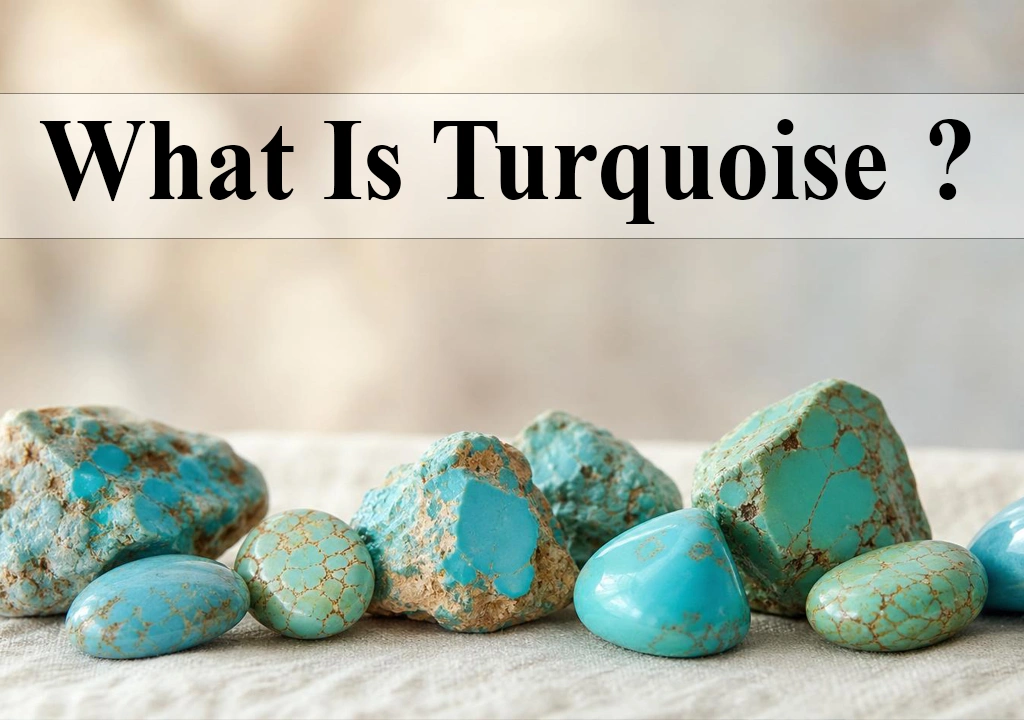
Turquoise is one of the oldest gemstones known to human civilization, prized for its distinctive blue-to-green color for more than 7,000 years. Yet despite its familiarity, many people who search for turquoise jewelry or loose stones have never encountered a clear, science-based answer to a simple question: what is turquoise, exactly? This guide covers the mineral’s chemical composition, classification, and how it forms in nature — the foundation for exploring specific varieties like Persian turquoise, its cultural meaning, or how to tell a real stone from a fake.
What Is Turquoise? (Quick Definition)
Turquoise is an opaque, typically blue-to-green mineral composed of hydrated copper and aluminum phosphate. It’s opaque rather than transparent, with a smooth, waxy luster, and it forms in arid and semi-arid regions through the weathering of copper-bearing rocks, usually near the surface where groundwater carrying dissolved copper interacts with aluminum-rich host rock. Gemologically, turquoise is classified as a phosphate mineral, and its finest material — dense, evenly colored, and free of matrix — has been used in jewelry and ornamentation since antiquity, from ancient Egypt to Persia and the pre-Columbian Americas.
Chemical Composition and Mineral Classification
Turquoise’s chemical formula is CuAl6(PO4)4(OH)8·4H2O — a hydrous (water-containing) phosphate of copper and aluminum. The copper is what gives turquoise its signature blue color; when iron partially substitutes for aluminum, or the copper content drops, the stone shifts toward green. According to the Gemological Institute of America (GIA) and reference mineralogical databases such as Mindat, turquoise crystallizes in the triclinic system, but well-formed, visible crystals are extremely rare in nature. Instead, turquoise almost always forms as cryptocrystalline masses — dense aggregates of microscopic crystals — which is why it appears opaque rather than transparent, and why it’s cut as cabochons rather than faceted like transparent gems.
How Turquoise Forms in Nature
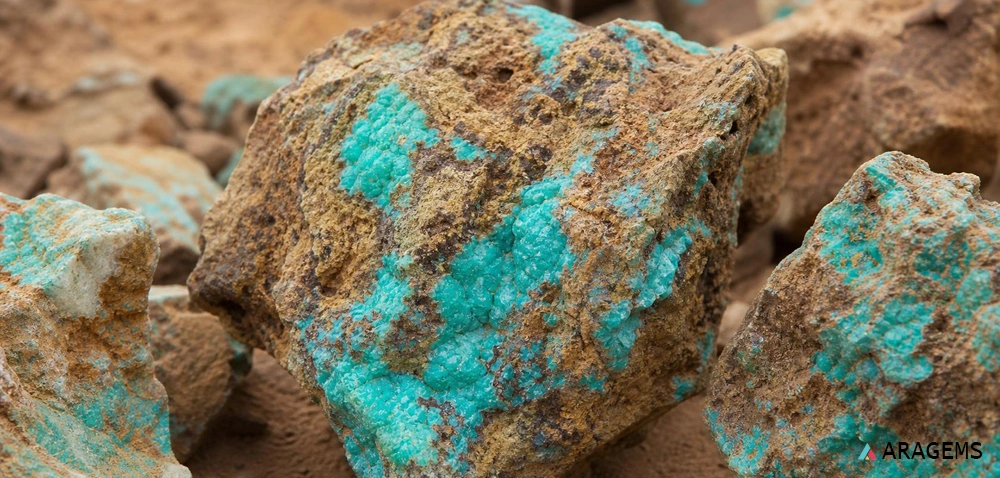
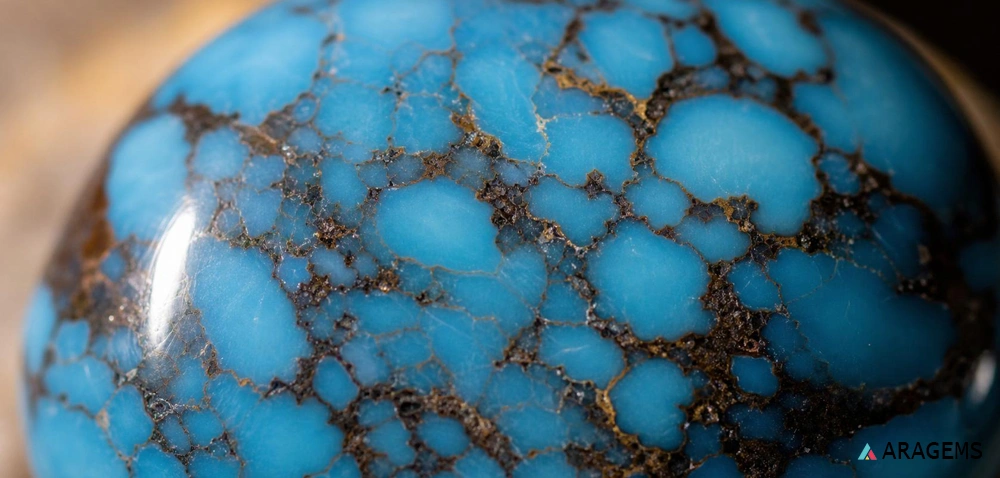
Turquoise is a secondary mineral, meaning it doesn’t crystallize directly from molten rock but forms later, through chemical weathering. The process requires three ingredients in the right setting: a copper source (typically sulfide ore bodies such as chalcopyrite), an aluminum-rich host rock (often altered feldspar in volcanic or sedimentary rock), and a dry climate where slightly acidic, copper-bearing groundwater can slowly percolate through fractures near the surface without being diluted or flushed away. Over long periods, this water deposits turquoise in veins, nodules, and crusts within the host rock — which is why turquoise is so often found intergrown with its surrounding matrix, the dark webbing or spotting many buyers recognize in \”spiderweb\” turquoise.
Physical and Optical Properties
The table below summarizes the key gemological properties used to identify and grade turquoise, based on standard reference data from GIA and Gem-A.
| Property | Value |
|---|---|
| Chemical formula | CuAl6(PO4)4(OH)8·4H2O |
| Mineral class | Phosphate |
| Crystal system | Triclinic (rarely visible; usually cryptocrystalline/massive) |
| Hardness (Mohs) | 5 to 6 |
| Specific gravity | 2.60 to 2.85 (porous material can be lower) |
| Refractive index | ≈ 1.61 to 1.65 |
| Luster | Waxy to subvitreous |
| Transparency | Opaque |
| Color range | Sky blue, blue-green, green, yellowish green |
| Streak | White to pale green |
Why Does Turquoise Color Vary? Blue vs Green
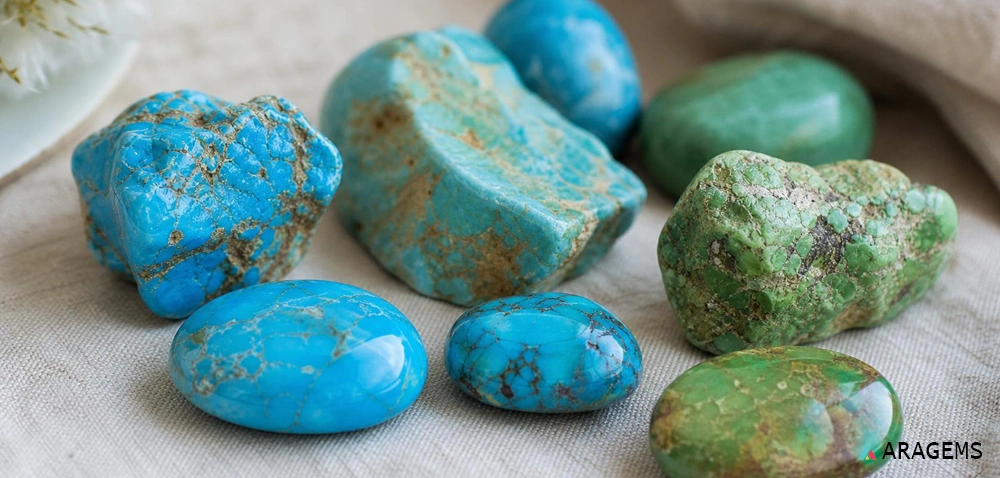
Color is turquoise’s most commercially important characteristic, and it comes down to trace-element chemistry. Pure, copper-rich turquoise with minimal iron tends toward a saturated sky blue — the color most associated with the finest material, including much of Iran’s Neyshabur production. When iron substitutes for aluminum in the crystal structure, or when the stone loses water content through dehydration or heat exposure, the color shifts toward green. This is also why some turquoise can change color over time with exposure to oils, skin chemistry, heat, or sunlight — a natural property of the mineral rather than a sign of poor quality, though excessive color shift is often linked to high porosity or improper treatment.
Where Turquoise Comes From: Major Sources Worldwide
Turquoise deposits are geographically limited because they require the specific combination of copper ore, aluminous host rock, and arid climate described above. The most historically and commercially significant sources include:
- Iran — Home to the Neyshabur mines in Khorasan Province, worked for over 2,000 years and long regarded as the source of the world’s finest blue turquoise, along with deposits in Kerman and Damghan.
- United States — The American Southwest (Arizona, Nevada, New Mexico) has produced historically important turquoise from mines such as Sleeping Beauty, Kingman, Bisbee, and Royston, closely tied to Native American silversmithing traditions.
- China — Hubei Province is now the world’s largest producer by volume, supplying much of the turquoise used in mass-market jewelry.
- Egypt — The Sinai Peninsula holds some of the oldest known turquoise mines, worked by ancient Egyptians as early as 3000 BCE.
- Other notable sources — Afghanistan, Tibet, Chile, and the southwestern United States more broadly each contribute smaller but gemologically distinct deposits.
Persian turquoise occupies a particularly important place in this global picture; for a deep dive into its geology, mines, and what makes it distinct, see our full guide to Persian turquoise.
Natural, Treated, and Synthetic Turquoise
Because natural, untreated turquoise of gem quality is relatively scarce, the market includes a wide range of treatments: stabilization (impregnating porous material with polymer resin to improve durability and color), dyeing, and reconstitution (compressing turquoise powder and fragments into a solid block). None of these treatments are inherently fraudulent when disclosed — stabilization, in particular, is an industry-standard practice for porous material. Synthetic turquoise is a separate category altogether: rather than treating natural material, it’s manufactured in a lab (most commonly using the Gilson process) to replicate turquoise’s chemical composition and appearance without ever forming underground. Undisclosed treatment or synthetic material sold as natural, along with outright imitation using dyed howlite, magnesite, or plastic, remains a common problem for buyers.
What Is Turquoise Called? (Origin of the Name)
In Persian, turquoise is called firoozeh (also spelled piruzeh), a name historically linked to the idea of victory and triumph. The English word \”turquoise\” comes from the French \”pierre turquoise,\” literally \”Turkish stone\” — a reference to the historical trade routes through Turkey that first carried Persian turquoise into Europe, even though the stone itself did not originate there. So while turquoise is sometimes casually called \”the turquoise stone\” in English, its most historically significant regional name is the Persian firoozeh.
Turquoise Throughout History and Culture
Turquoise has carried symbolic weight across an unusually wide range of civilizations. Ancient Egyptians inlaid it in royal jewelry and funerary masks, including pieces associated with Tutankhamun. In Persia, turquoise decorated royal regalia, religious architecture, and the domes of mosques, and was believed to offer protection. Indigenous peoples of the American Southwest, particularly Navajo, Zuni, and Pueblo artisans, developed turquoise-and-silver jewelry traditions that remain culturally significant today. Turquoise is also used widely in jewelry today and is the traditional December birthstone. For the full cultural history, symbolism, and spiritual associations, see our dedicated guide to turquoise meaning.
What Determines the Value of Turquoise?
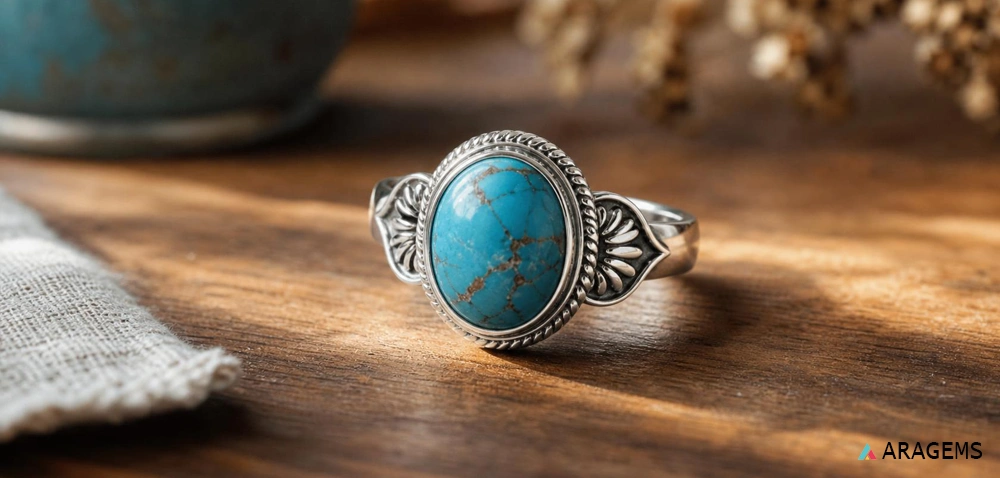
Turquoise value depends on a combination of color (saturated, even blue is generally most prized), matrix pattern, porosity and hardness, treatment status (natural and untreated stones command a significant premium), and provenance — stones from historically significant mines, including Iran’s Neyshabur deposits and now-closed American mines like Sleeping Beauty, carry added value tied to rarity and reputation. For a detailed breakdown of pricing specific to Iranian material, see our Persian turquoise price per carat guide.
Frequently Asked Questions
What is turquoise?
Turquoise is an opaque, blue-to-green hydrous phosphate mineral of copper and aluminum, prized as a gemstone for more than 7,000 years.
What is turquoise made of?
Chemically, turquoise is CuAl6(PO4)4(OH)8·4H2O — a hydrated phosphate of copper and aluminum, formed through the weathering of copper ore in arid environments.
What is a turquoise stone called?
In Persian, turquoise is called firoozeh (also spelled piruzeh). The English name comes from the French \”pierre turquoise,\” or \”Turkish stone.\”
What type of rock is turquoise?
Turquoise isn’t a rock — it’s a mineral, specifically a phosphate mineral. It forms as dense, massive nodules and veins within a surrounding host rock rather than being a rock type itself.
Is turquoise a crystal or a mineral?
Turquoise is a mineral. Its crystal system is triclinic, but visible individual crystals are rare — it almost always forms as dense, massive (cryptocrystalline) material rather than large single crystals.
Is turquoise an expensive stone?
Price varies enormously by quality and treatment. Treated or reconstituted turquoise can cost only a few dollars per carat, while untreated, high-grade natural turquoise — such as fine Persian Ajami material — can reach hundreds of dollars per carat.
What does turquoise look like, and what is it used for?
Those are big enough questions to deserve their own detailed guides — check back soon for our dedicated articles on turquoise’s appearance and everyday uses.
Conclusion
Turquoise is far more than a color — it’s a distinct mineral with a specific chemistry and a demanding set of formation conditions. Understanding what turquoise actually is provides the foundation for every other question about the stone: what it looks like, what it means, how it’s used, and what makes one source more valuable than another. To go deeper, explore our complete guide to Persian turquoise, browse the full range of types of turquoise, or view our natural turquoise stone collection.