

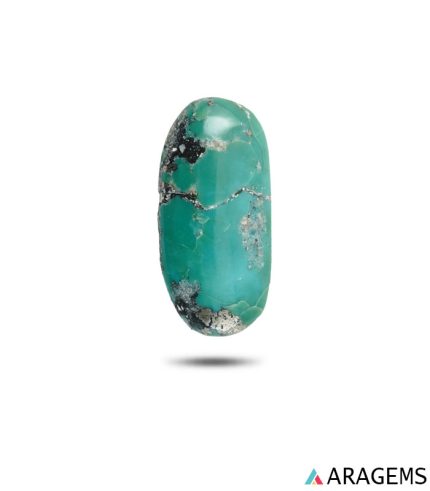
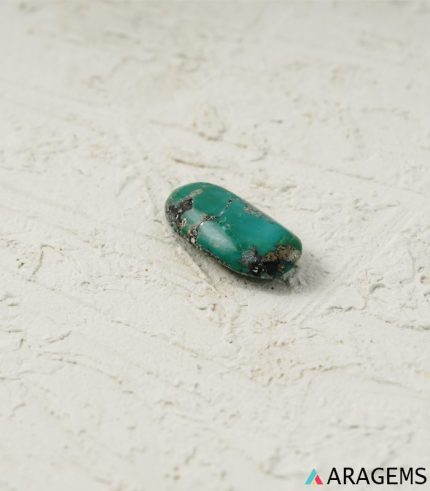
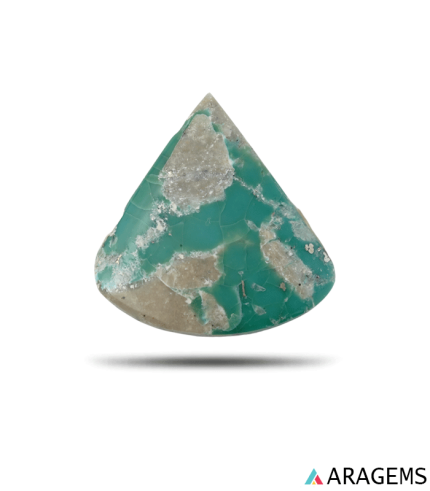
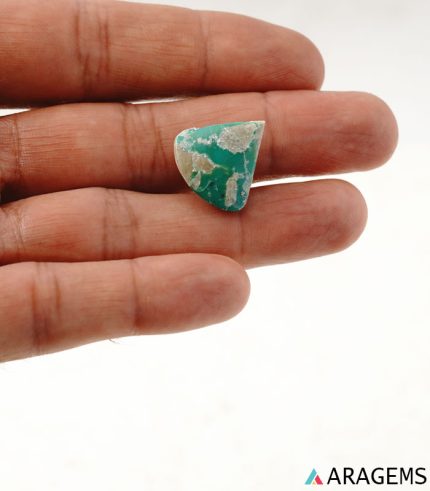
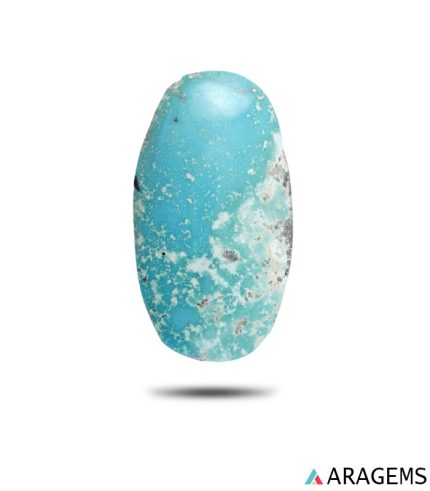
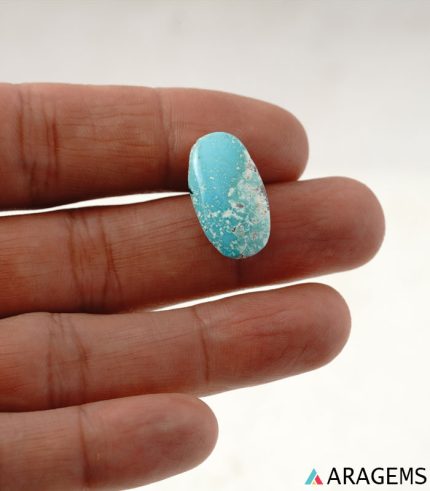
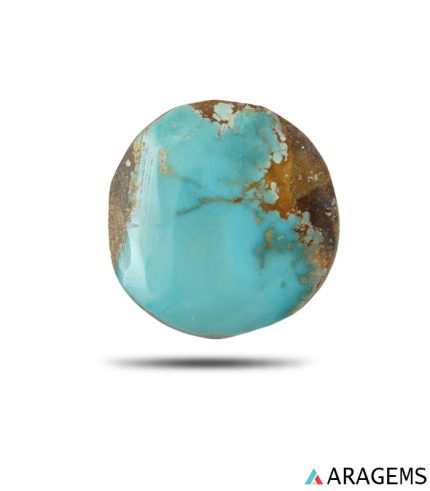
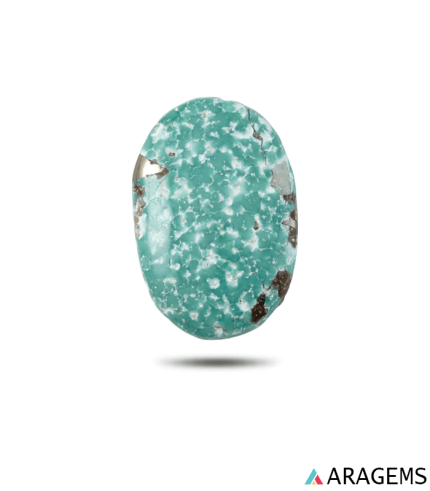
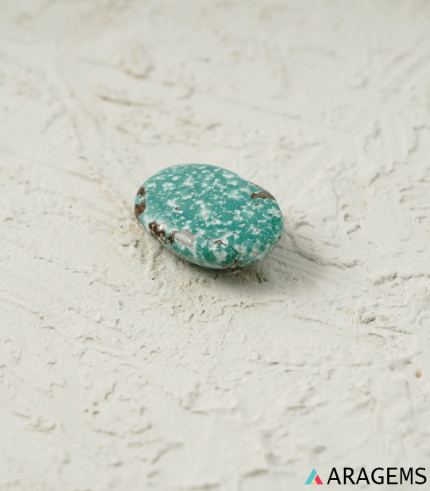
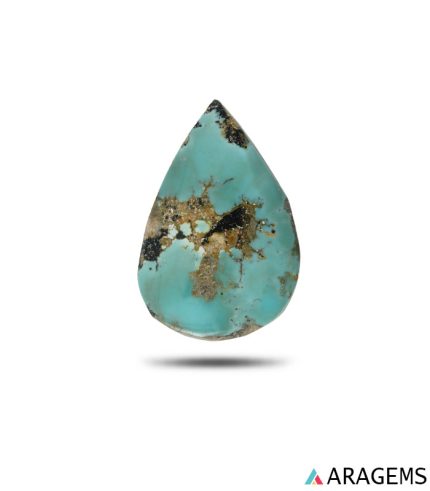
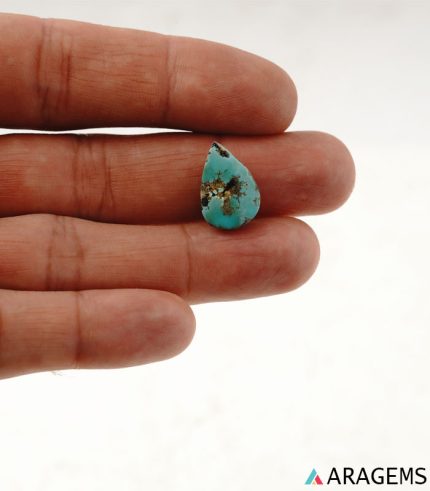
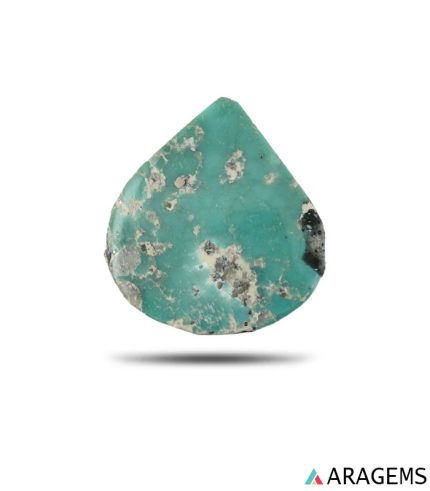
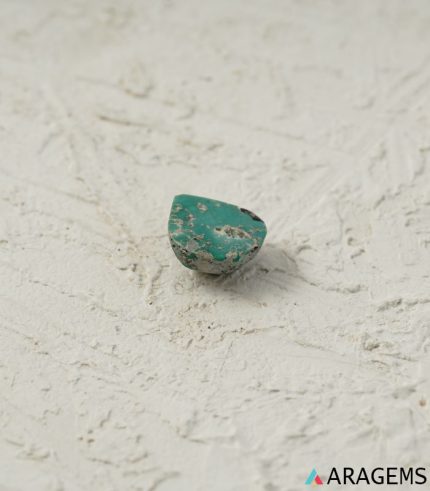
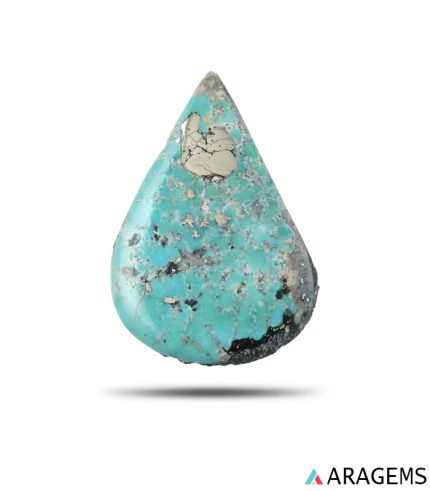
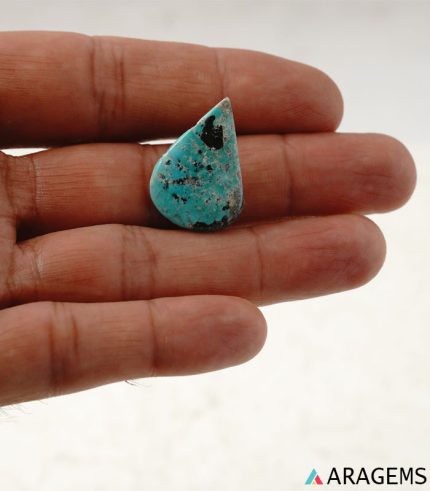
Persian turquoise stones — sold internationally as Iranian turquoise — have been mined in Iran for at least 2,000 years. Every stone in this collection is natural and untreated: never stabilized, dyed, or waxed. We cut and polish each one in our own lapidary workshop from Neyshabur and Kerman material, in cabochon, teardrop, oval, and freeform shapes. Colors run from pure sky-blue to deep blue-green with golden, black, or pyrite matrix. Each stone is loose, one of a kind, and listed with its exact weight, dimensions, and mine of origin.
What Is an Iran Turquoise Stone?
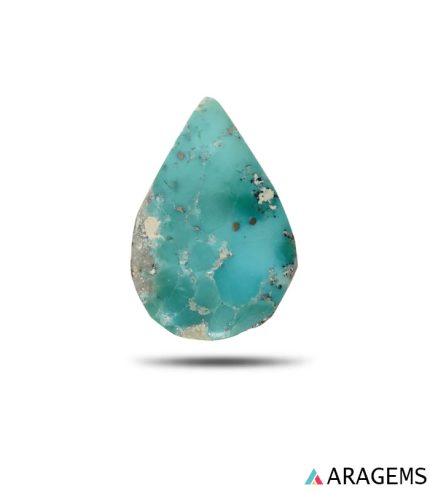
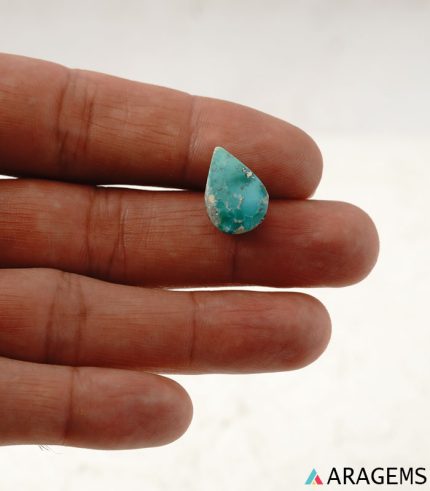
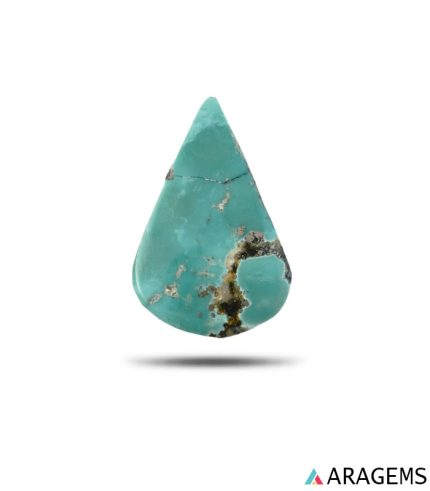
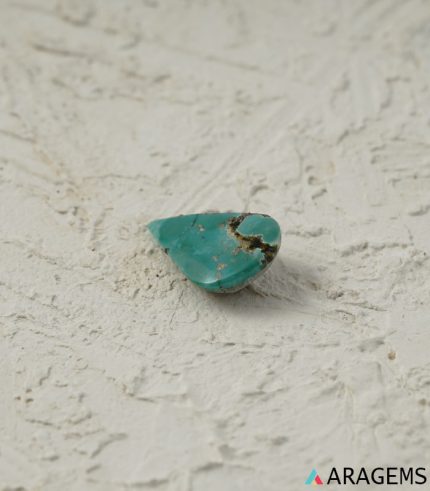
An Iran turquoise stone is turquoise mined within Iran, most often from the Neyshabur deposits in Khorasan Razavi province or the copper-bearing deposits near Kerman. It is the same material sold in Western markets as Persian turquoise, and in South Asian markets as irani firoza. Chemically it is a hydrated copper aluminum phosphate, CuAl6(PO4)4(OH)8·4H2O, with a Mohs hardness of 5 to 6 and a specific gravity near 2.7.
Natural and Untreated — and Why That Shows
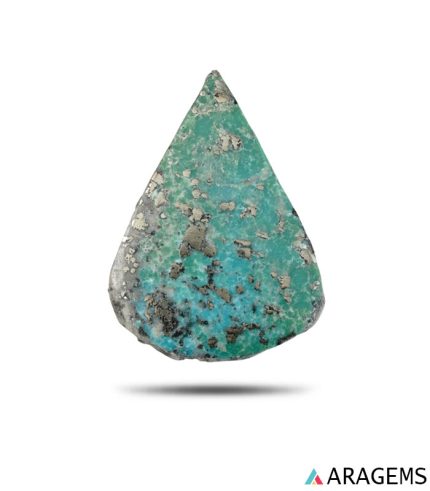
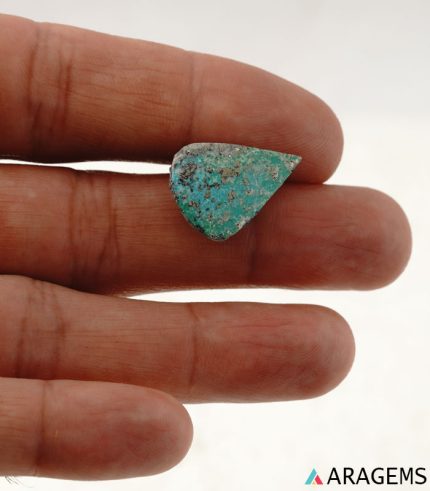
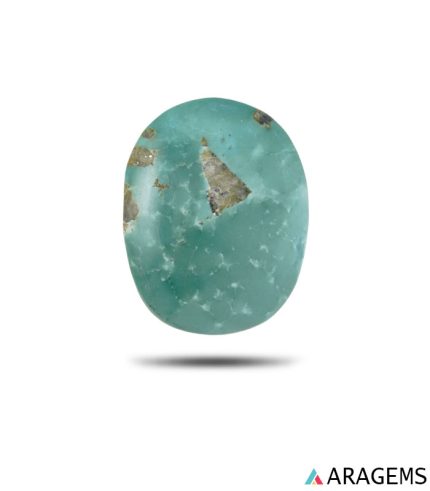
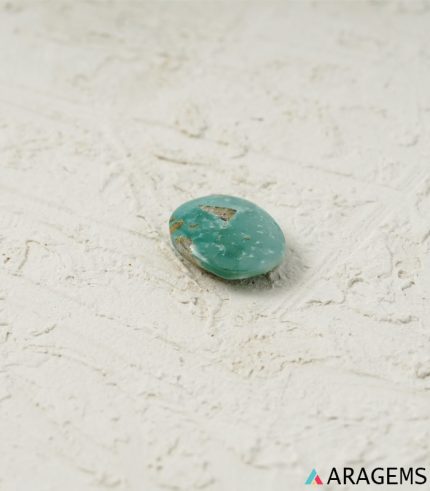
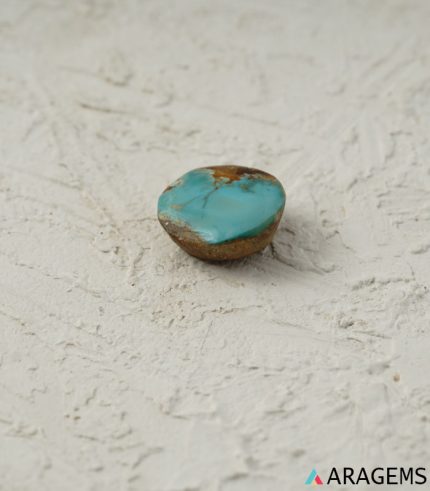
Most turquoise on the world market is stabilized: porous material is impregnated with resin so it can be cut without crumbling. Some is also dyed. Neither is fraud when disclosed, but both change the stone. Every piece here is a natural turquoise stone — untreated, unwaxed, undyed. That is possible because we select only material dense enough to take a polish on its own, and it is why some stones show visible pits or an irregular back rather than a flawless face. Our guide to real vs fake turquoise covers the tests you can run yourself.
Reading the Matrix: Spiderweb, Golden Veining, and Pyrite
The dark veining is the host rock the turquoise crystallized inside. Fine, even webbing across the face is what collectors call spiderweb turquoise, and it usually raises a stone's value rather than lowering it. Golden-brown veining is typically iron-rich limonite. The small metallic flecks in many Kerman stones are pyrite inclusions, formed because those deposits sit in copper-bearing ground. None of these are flaws — they are the record of how the stone formed, and they are why no two are alike.
What These Stones Cost
Color saturation, evenness, matrix pattern, hardness, and size set the price, roughly in that order. A small, evenly colored Ajami cabochon will outprice a much larger pale or heavily veined stone. Stones in this collection run from about €6 for small accent pieces to over €60 for larger collector material. Our breakdown of Persian turquoise price per carat explains the grading in detail, and jewelers or resellers buying volume can request rates on our turquoise wholesale page.
Living With an Untreated Stone
Untreated turquoise is porous and reacts to oils, perfume, household cleaners, and long sun exposure — color can shift green over years of skin contact. Clean it with a dry or barely damp soft cloth, never an ultrasonic cleaner, and store it away from harder gems. Where you can, set it in a bezel rather than prongs.
Frequently Asked Questions
Is Persian turquoise the same as Iranian turquoise?
Yes. Both name turquoise mined in Iran. "Persian" is the older trade name, used because the stone reached Europe through Persia long before the country was called Iran. In South Asian markets the same material is sold as irani firoza or original irani feroza stone.
Are these genuine turquoise gemstones, or treated?
Genuine and untreated. No stabilization, dye, wax, or reconstitution. Every listing states the mine, weight, and measurements, so you can verify exactly what you are buying.
What is Ajami turquoise?
Ajami is the Iranian trade grade for the finest Neyshabur material: a saturated, even sky-blue with little or no matrix. It is the scarcest and most expensive grade.
How do I tell real turquoise stones from imitations?
Howlite and magnesite are the commonest imitations, both dyed to mimic turquoise. Weight in the hand, the color of the unpolished back, and how the veining sits inside the stone rather than on its surface are the quickest tells.
Do you ship internationally?
Yes. Stones ship worldwide from Iran with tracked delivery. Wholesale and repeat buyers can arrange consolidated shipments.