
Sleeping Beauty Turquoise: Quality, Price, and the Best Alternatives in Jewelry

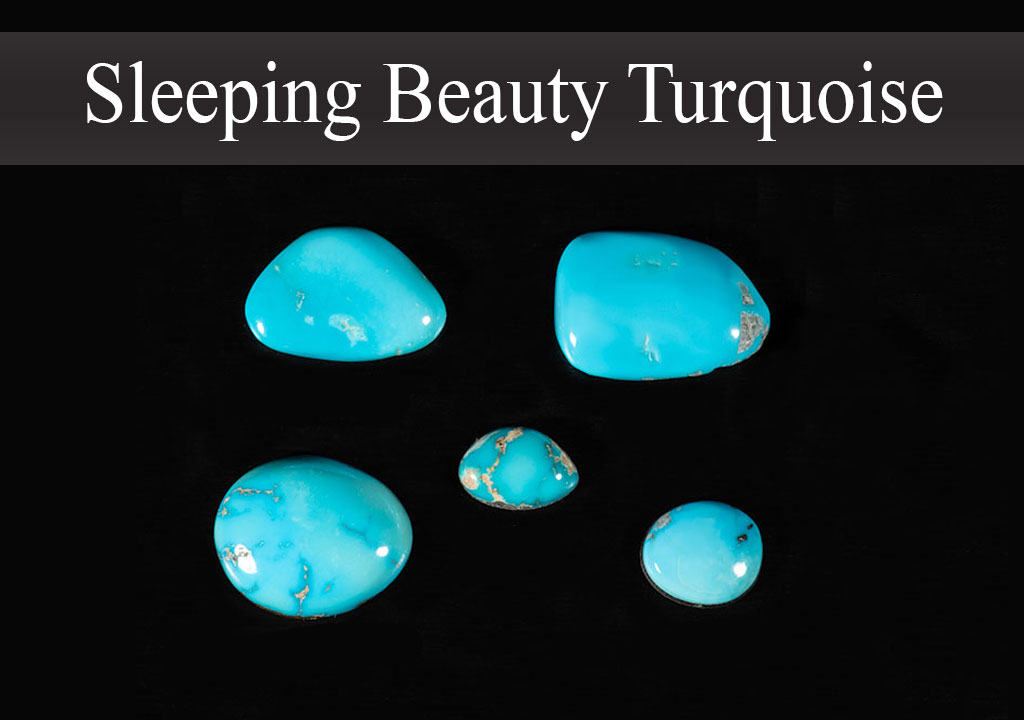
Turquoise has long been regarded as one of the most mesmerizing gemstones on earth, revered for its vivid colors and cultural significance. Among the myriad varieties of turquoise, Sleeping Beauty turquoise stands out as a gemstone of exceptional beauty and history. Characterized by its uniform blue hue and lack of intricate veining, Sleeping Beauty turquoise has earned a special place in the world of gemstones and fine jewelry. This article delves into the scientific aspects, origins, uses, and comparison with other turquoise varieties, including Persian turquoise, while also exploring its popularity in contemporary jewelry designs
What Is Sleeping Beauty Turquoise?
Sleeping Beauty turquoise is a type of turquoise primarily sourced from the Sleeping Beauty Mine located in Globe, Arizona, USA. This turquoise is famed for its smooth, clear, sky-blue color, which is highly valued for its consistency and uniformity. Unlike many other turquoise varieties, which may feature black or brown veining, Sleeping Beauty turquoise is known for being relatively free from these veins, giving it a more pristine and uniform appearance. The stone typically exhibits a vibrant blue to blue-green color, though it is the unblemished, vivid blue that has become the hallmark of this particular type of turquoise.
The turquoise found in the Sleeping Beauty Mine is relatively high in copper and low in iron, which influences its characteristic color. The stone is classified as a hydrated phosphate of copper and aluminum. It forms in arid, copper-rich environments, where the mineral-rich waters leach through the rock and gradually deposit turquoise in veins or nodules within the host rock.
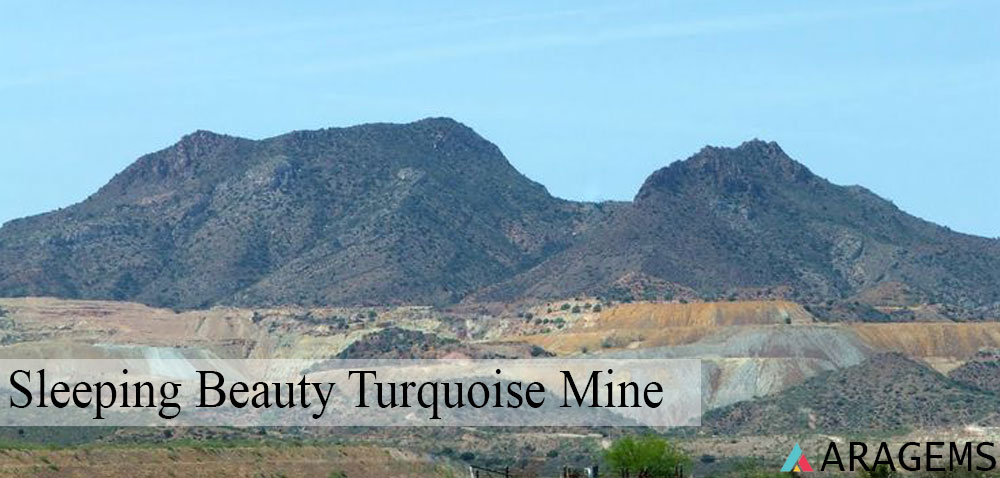
Sleeping Beauty turquoise is often cut into cabochons, a smooth, rounded shape without facets, or used in bead form for turquoise bead necklaces, bracelets, and earrings. These pieces are highly sought after for their vibrant color and flawless appearance.
Geological and Historical Background of the Sleeping Beauty Mine
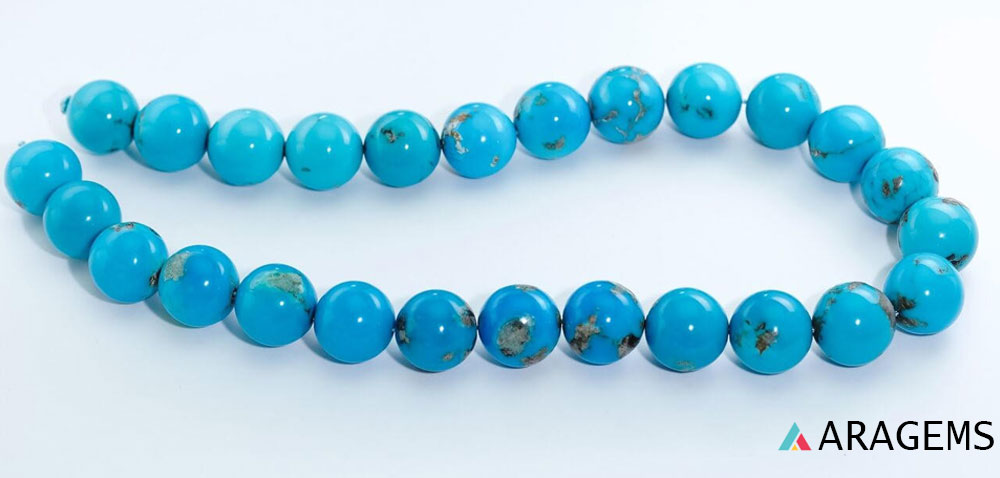
The Sleeping Beauty Mine is named after the mountain it is located in, which resembles a reclining woman, asleep. The mine itself has a rich geological history that dates back to the early 20th century, with the first significant turquoise deposits being discovered in the area in the 1800s. However, the mine did not begin production in earnest until the 1950s. In the 1970s and 1980s, Sleeping Beauty turquoise began to emerge as a prominent gemstone in the jewelry industry, primarily due to its high quality and consistent color, which made it ideal for use in fine jewelry.
The mine operated continuously until its closure in 2012, primarily due to diminishing yields and the increasing difficulty of extracting high-quality turquoise. Despite its closure, Sleeping Beauty turquoise remains highly regarded and is still widely available on the market, although it is becoming rarer and more expensive as supplies dwindle.
The Chemical Composition of Sleeping Beauty Turquoise
Understanding the chemical makeup of Sleeping Beauty turquoise provides insight into its formation and distinctive color. The primary components of turquoise are copper (Cu), aluminum (Al), phosphorus (P), oxygen (O), and water (H2O). These elements combine in a unique crystalline structure that forms the gemstone. The bright blue color of turquoise is typically a result of the copper content within the stone, which imparts its characteristic hue.
The chemical formula for turquoise is generally written as:
CuAl6(PO4)4(OH)8⋅4H2O
This composition is consistent across various types of turquoise, but slight variations in the proportion of copper, iron, and other elements can significantly affect the color and texture of the stone. In the case of Sleeping Beauty turquoise , the stone typically contains higher concentrations of copper, leading to its more vibrant and pure blue color.
Sleeping Beauty Turquoise vs. Persian Turquoise
When comparing Sleeping Beauty turquoise to Persian turquoise, it's important to note that both types are highly regarded for their beauty and quality, but they differ in several ways, particularly when it comes to appearance, quality, and price.
Iranian turquoise is a historically renowned variety of turquoise that comes from Iran (formerly Persia), where turquoise has been mined for over 2,000 years. Iranian turquoise is available in both veined and non-veined forms, with the color ranging from blue to green. The non-veined blue variety of Iranian turquoise, often considered one of the highest-quality types, is especially comparable to Sleeping Beauty turquoise. This specific form of non-veined Iranian blue turquoise can have a rich, vibrant blue color without the veining commonly seen in other varieties of turquoise. It’s important to highlight that non-veined Iranian blue turquoise is often regarded as superior to Sleeping Beauty turquoise in terms of color richness and overall quality.
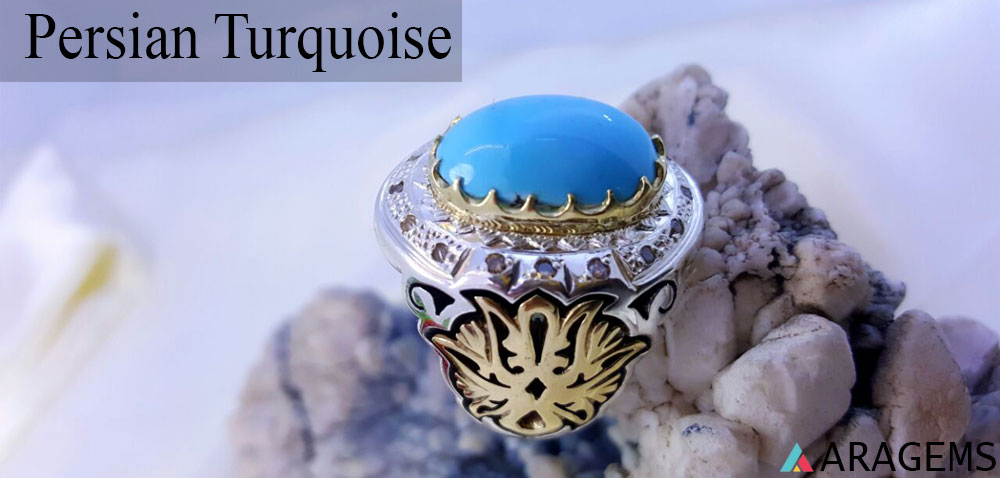
In terms of quality, non-veined Iranian turquoise is on par with or even superior to Sleeping Beauty turquoise. While Sleeping Beauty turquoise is known for its uniform, bright blue color and smooth texture, non-veined Iranian blue turquoise offers a deeper, more saturated blue that has been prized for centuries by collectors and jewelers alike. Due to its high quality, non-veined Iranian turquoise is often seen as the top choice for fine jewelry, alongside or even above Sleeping Beauty turquoise.
However, due to the closure of the Sleeping Beauty Mine in 2012, Sleeping Beauty turquoise has become increasingly scarce, making it more difficult to find and more expensive. This scarcity has driven up its price significantly. On the other hand, non-veined Iranian blue turquoise remains a more readily available and excellent alternative. Given its comparable or superior quality, as well as its relatively stable availability, non-veined Iranian blue turquoise is the ideal substitute for those seeking the look and quality of Sleeping Beauty turquoise, but without the inflated prices caused by its limited supply.
In summary, if you're looking for a turquoise stone with the same rich blue color and smooth texture as Sleeping Beauty turquoise, but at a more consistent price point, non-veined Iranian blue turquoise is an excellent option. Its comparable quality, combined with a history of prestige and availability, makes it the perfect alternative to the increasingly rare and expensive Sleeping Beauty turquoise.
Price of Sleeping Beauty Turquoise
The price of Sleeping Beauty turquoise can vary depending on the size, quality, and source of the stone. Due to the mine's closure in 2012 and the limited supply of high-quality turquoise, Sleeping Beauty turquoise has become more expensive over the years. The price is generally lower than Persian turquoise, but it is still considered a valuable gemstone, particularly when used in fine jewelry. Factors that influence the price include the stone's clarity, color intensity, and overall craftsmanship of the jewelry piece.
Conclusion
Sleeping Beauty turquoise remains one of the most beloved and iconic turquoise varieties in the world. Known for its flawless blue hue and rich history, it continues to be a favorite among gemstone collectors and jewelry enthusiasts. Whether you're drawn to the smooth, uninterrupted color of Sleeping Beauty turquoise, the deeper tones of Persian turquoise, or the intricate designs found in modern turquoise jewelry, this gemstone remains a symbol of timeless beauty.
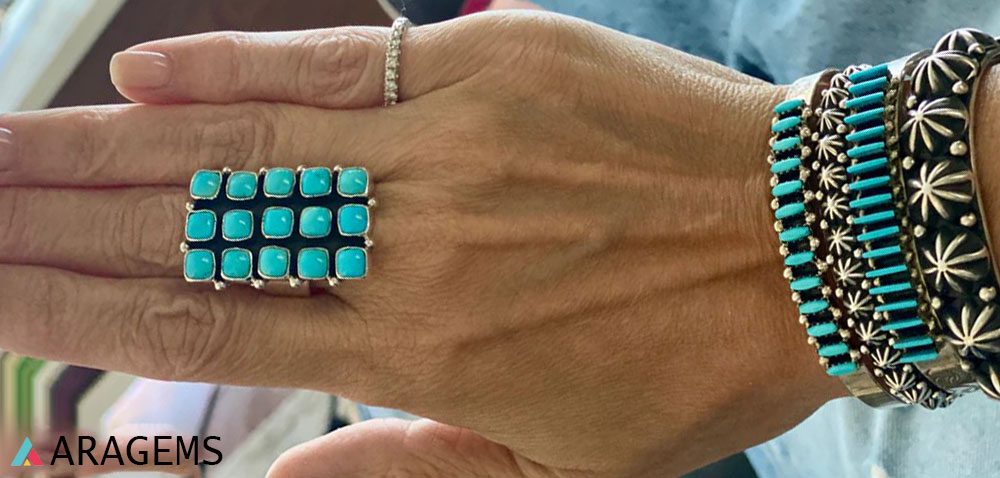
With its scientific makeup, historical legacy, and enduring appeal, Sleeping Beauty turquoise continues to shine as a gemstone of choice for fine jewelry, offering a glimpse into the rich geology of Arizona and the cultural significance of turquoise across the globe. Whether incorporated into a Sleeping Beauty turquoise ring, necklace, or bracelet, this gemstone is sure to remain a treasured part of the jewelry world for years to come.