

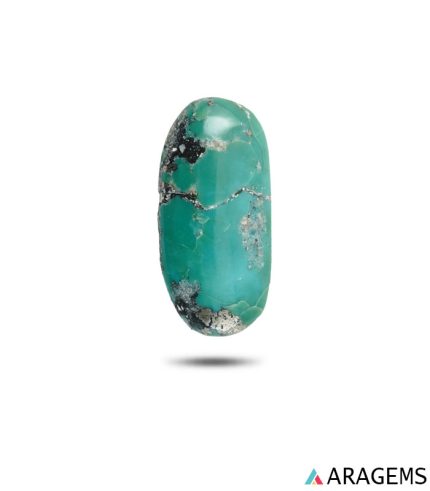
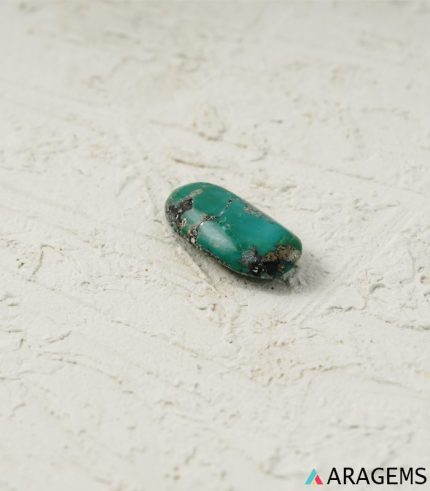
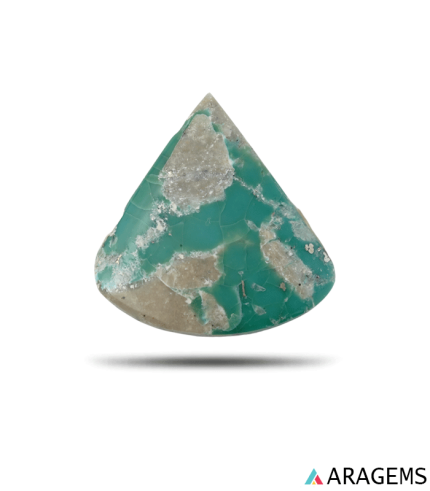
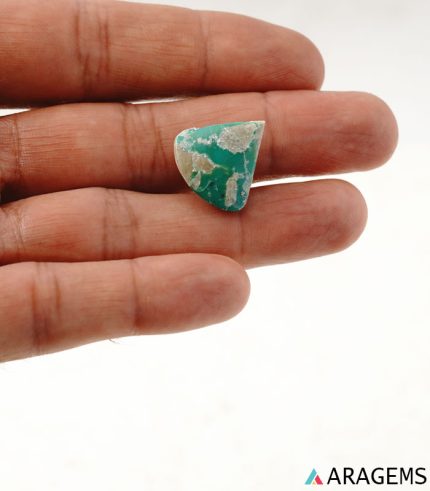
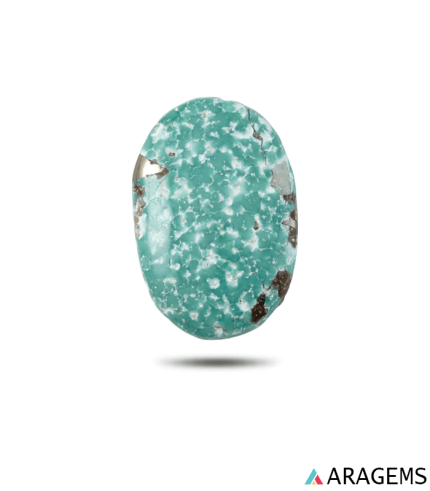
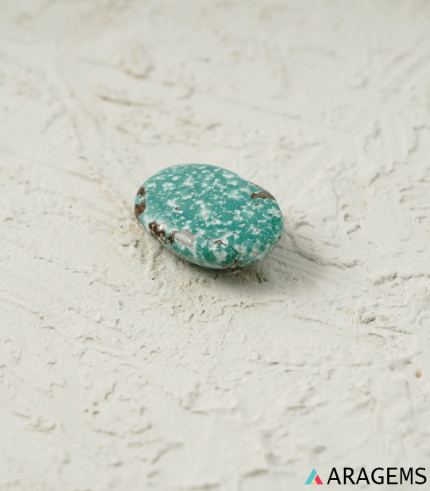
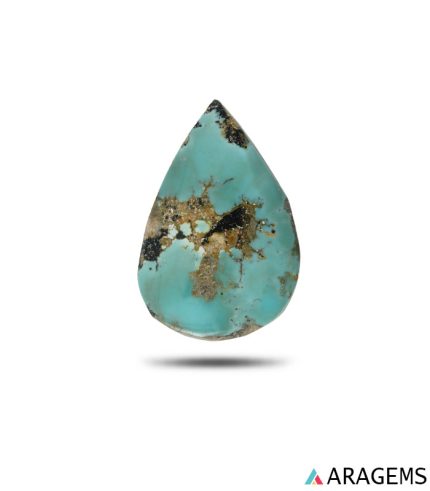
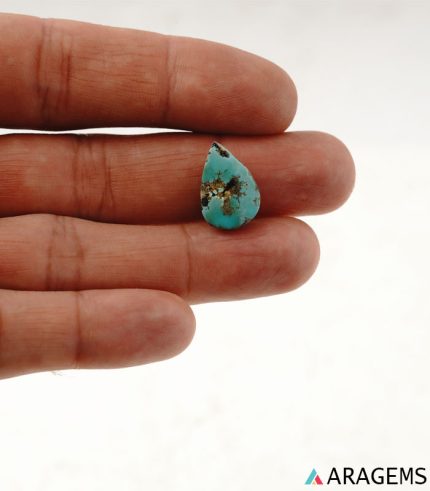
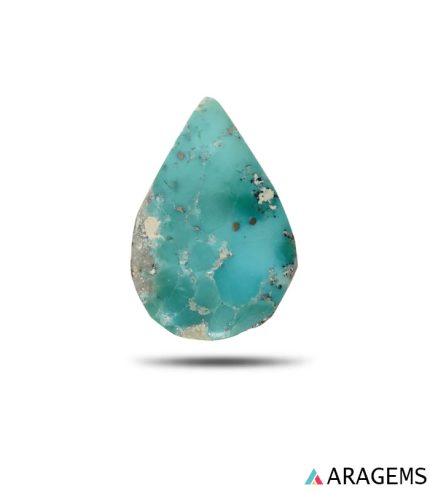
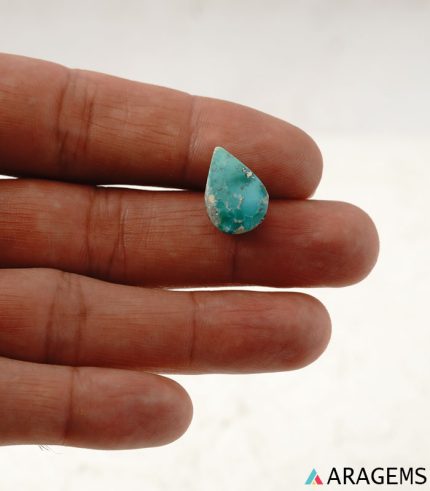
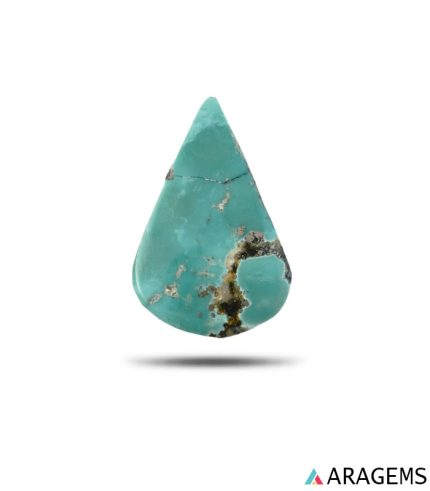
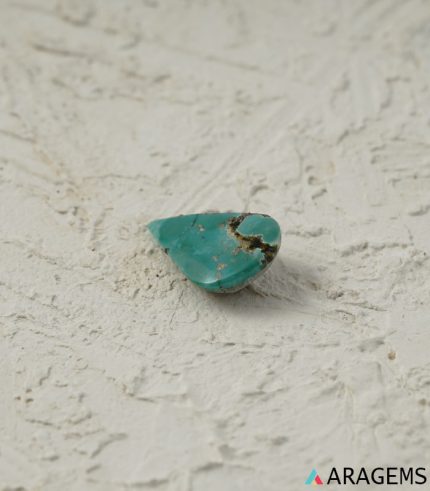
Kerman turquoise comes from the Meiduk copper mine near Shahr-e Babak, Kerman Province — a byproduct deposit, unlike Neyshabur’s dedicated turquoise mine. Every piece in this collection is natural and untreated: never stabilized, dyed, or waxed. We cut and polish each cabochon in our own lapidary workshop, prized for its signature pyrite matrix and blue to blue-green tones. Each stone is loose, one of a kind, and listed with its exact weight, dimensions, and mine of origin.
Why Kerman Turquoise Is Different: A Copper Mine's Byproduct
Kerman turquoise comes primarily from the Meiduk mine (also spelled Miduk or Meydook), a large copper deposit about 42 km northeast of Shahr-e Babak, with a smaller secondary source called Chah Firouzeh nearby. Both sites were opened as copper mines, not turquoise mines — turquoise turns up incidentally when a vein is exposed on a working bench. Because of this, supply is irregular: some months a mining cooperative recovers a few tons of turquoise-bearing rock, other months none at all. This stands in contrast to Neyshabur, where mining is planned around turquoise veins and output is comparatively steady.
The Pyrite Signature: Color and Texture
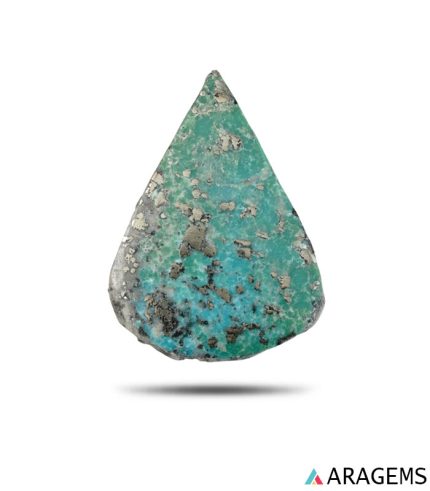
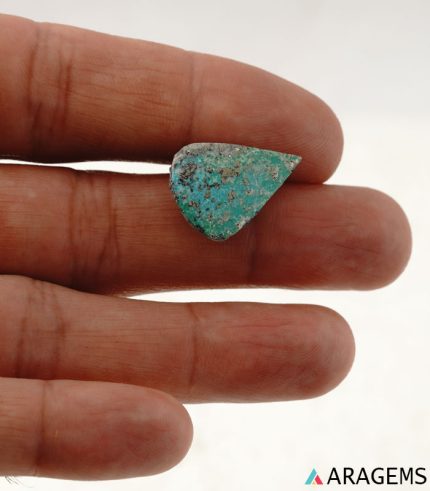
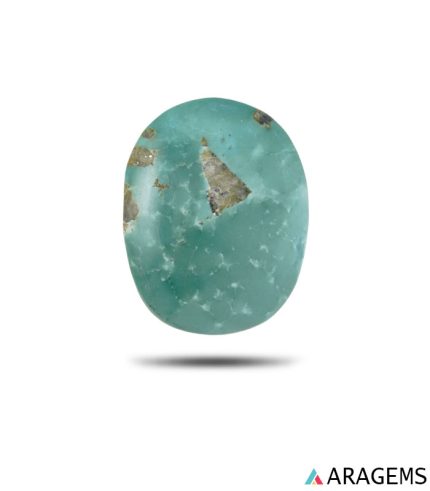
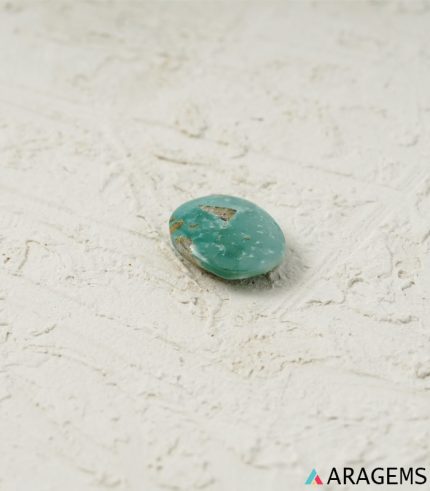
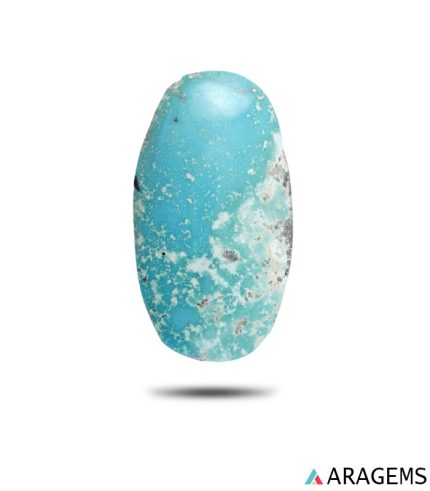
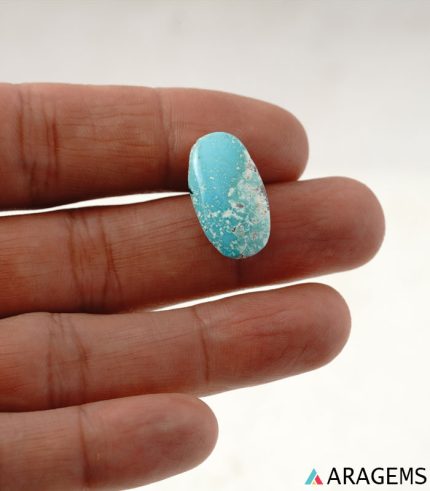
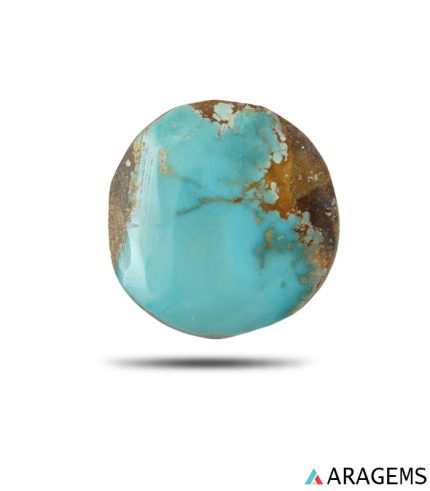
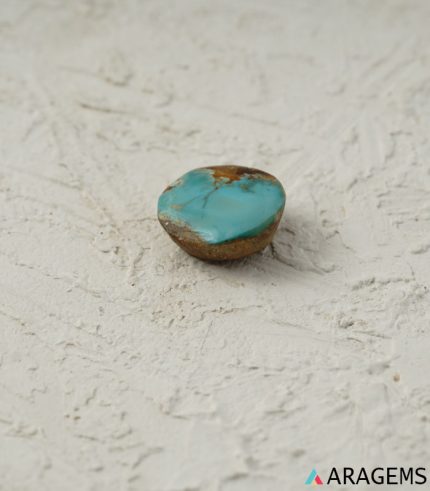
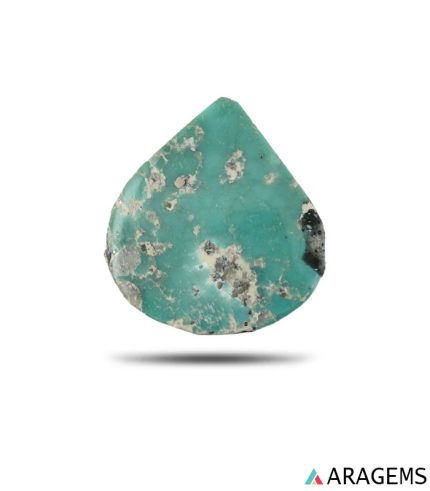
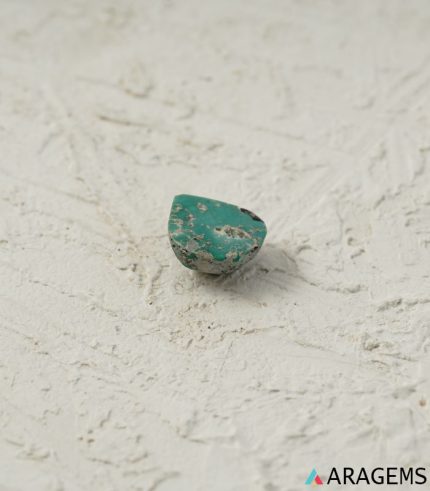
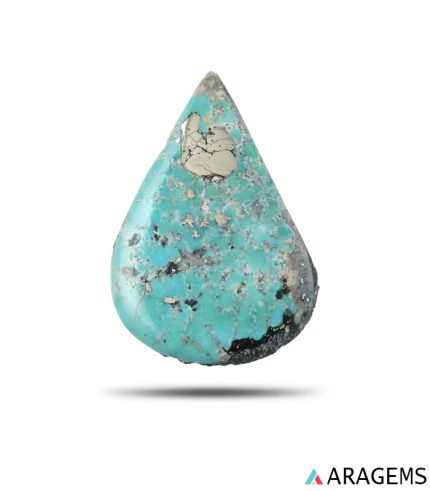
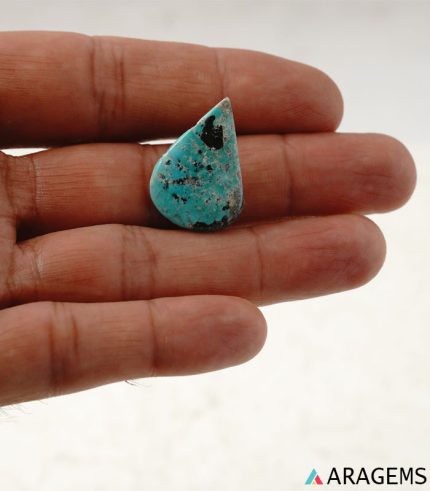
Kerman turquoise ranges from blue to blue-green and green, generally with a slightly softer, less saturated tone than top-grade Neyshabur Ajami material. Its most recognizable feature is small, brassy pyrite flecks embedded in the stone — a natural byproduct of forming in the same copper-sulfide-rich rock, not a defect. Several cabochons in this collection are cut specifically to showcase this pyrite matrix.
Kerman vs. Neyshabur Turquoise
Both are genuine Persian turquoise, but they differ in origin and character. Neyshabur is a dedicated turquoise mine with steady output and material prized for solid, saturated blue (Ajami) or fine spiderweb matrix (Shajari). Kerman is a copper mine where turquoise is a secondary find, with less predictable supply and a signature pyrite matrix rarely seen in Neyshabur material. Neither is inherently superior — they simply come from different geology.
Buying With Confidence: Why the Mine of Origin Matters
"Persian turquoise" is often used as a generic label rather than a precise indicator of mine origin, and Kerman material is sometimes sold under the more prestigious "Neyshabur" name — a practice we don't follow. Every stone in this collection is natural and untreated: never stabilized, dyed, or waxed. We cut and polish each cabochon in our own lapidary workshop and list its exact mine of origin, weight, and dimensions, so you always know precisely what you are buying.
Frequently Asked Questions
What is Kerman turquoise?
Turquoise recovered as a byproduct of copper mining at the Meiduk mine (and the smaller Chah Firouzeh source) near Shahr-e Babak, in Iran's Kerman Province.
Is Kerman turquoise the same as Neyshabur turquoise?
Both are natural Persian/Iranian turquoise, but from different mines. Neyshabur is a dedicated turquoise deposit with steady supply; Kerman is a copper mine where turquoise appears incidentally, with a distinctive pyrite matrix and less predictable output.
Why does Kerman turquoise have metallic gold flecks?
The small brassy flecks are pyrite, which forms naturally in the same copper-sulfide-rich rock that produces the turquoise. It's a sign of authentic geology, not a flaw.
Is Kerman turquoise treated?
No. Every stone in this collection is natural and untreated — never stabilized, dyed, or waxed.
How much does Kerman turquoise cost?
Price follows color saturation, matrix pattern, and size. See our Persian turquoise price per carat breakdown for the full grading criteria.
Where can I read more about Kerman turquoise?
Our complete guide to Kerman turquoise covers its geology, mining, and how it compares to Neyshabur turquoise.